Wednesday, August 29, 2012

Waves in the sky


This is one of the first photos I made the other night as the waves of aurora began to wash over the skies of northeast Minnesota. The aurora forecast and cloud forecast were good so I left home just before 11:30 PM and arrived at McFarland Lake just after midnight. I've been wanting to catch a good aurora show at McFarland for some time now. After several attempts over the last year I finally got what I was hoping for. This lake has a public swimming beach on the south shore and the beach looks almost due north, perfect for viewing the northern lights! The lake also has very distinctive bluffs lining its shores which makes for a very photogenic horizon. The aurora was already active when I left home, but the lights were faint at first. I was hoping to get to McFarland just after midnight as the lights often flare up in their intensity around that time. Sure enough, as I was driving up the Arrowhead Trail and midnight drew near, the lights started to pick up in their intensity. When I arrived at the lake there was a full-blown aurora storm waving and dancing throughout the sky. I scrambled to get my gear set up and as quickly as I could started making images. For the next 45 minutes I stood in awe as the sky erupted with waves of light and color over and over again. In this picture you can see a line of aurora that "points" to the left. This line resembled the wall cloud of a quickly advancing thunderstorm and much like a thunderstorm, the line quickly moved from right to left across the sky then faded away. And this was just the beginning of what would end up being an awesome geomagnetic storm that would carry on through the rest of the night and well into the morning.

Pink Elephant Balloon


Monday, August 27, 2012

I know what you did last summer


Nasturtium.

I've mentioned before that we grew some edible flowers, Sakata Sweet melons, and Tigger melons last year.

Here are a few of the other things we tried for the first time.


Plum Granny.
Supposed to be an heirloom "pocket" melon. (Somewhere between the size of a golf ball and a clementine.) I read that they were grown primarily for scent. They're so bland as to be inedible. They did smell great, but weren't as strong as I'd hoped. Nothing approaching the scent level of daffodils, say. It may vary with growing conditions but I doubt I'll try them again. Some little critters definitely like to eat them -- I think it was the most munched-on thing in the garden.


Japanese eggplant.
We liked these much better than traditional eggplants. They seemed less likely to grow bitter, and were more versatile for cooking just because of their size. We'll definitely grow these again.


Triamble squash.
A winter squash. I ordered these seeds purely based on the look of the pictures, which were idealized to say the least. Still, it's an interesting looking vegetable. But hard, hard, hard to cut. It tastes good, and keeps forever, but I really should have realized that ten-pound squashes were a little much for two people.


Top view.


Profile view.
These were really picked too soon. (The stem should be dry first.)

I couldn't find a picture, but we also grew lemon cucumbers. I was under the impression that they had a lemony taste, but the name just refers to the size (and color, somewhat). They tasted good enough, but did get bitter sometimes. Plus they have tiny hairs or spines that were difficult to rub off. And they didn't keep well at all -- one day, tops. So, back to white cucumbers for me.

If last year was the year of melon experimentation, this will be the year of the squash! More on that later.

Saturday, August 25, 2012

The 9th Regiment at Shiloh :: The Photo

This is the first of two photographs from the display at the visitor center at Shiloh National Battlefield.

The caption under this picture in the display reads: “Men of the 9th Indiana, a regiment of Hazen's brigade in the Army of the Ohio, in camp before the battle.”

Perhaps, partially due to the size of the photo on display (about 30x36 inches), it is out of focus.

The close-ups below begin from the left hand side of the above photograph. There is some overlap in the close-ups so some men will appear on more than one of the pictures.

Though out of focus, it is interesting to see the different stances and postures of the men. How some of them seem to be paying attention, and others, well not so much.


The First Beach House

Thursday, August 23, 2012

Muir Snowfield and the Disappointment Cleaver Route

Check out this 2x6 style of crevasse crossing. The image was snapped over the weekend (thankfully the board didn't)... The lumber has since been pulled, so now climbers must find another way around the crevasse. Here's more on the DC...

I received a few comments about the ice mass on the Muir Snowfield. Avid Rainier skier Ron Jarvis had this to say,
"When I started playing on Rainier in 1991 there were no dismounts required while skiing from Muir to Pebble in late summer/fall and as I recall that seemed to be the case right up until the last 2 or 3 years (dementia notwithstanding :-) ).

I would also add that similar conditions (volume/snow-ice depth) also seem to be the case on the contiguous neighbor to the east, the Paradise Glacier."

Old school technology on modern ice?

There is a lot to recommend the really light weight boots with super soft ankles like the La Sportiva Batura and Trango Extremes on steep technical ice but comfort and calf support aren't two that come to mind.


One way I have found to help that style of boot on endurance ice is use some old technology that a few back country skiers are now remembering as well.


Long Thongs and Alberg straps in the past were used to help stiffen the ankle on ski boots, long before I started skiing. A extra wrap or two around the ankle, then snugged up tight, is just what I need for long, full days on continuous ice. Might not be enough for Alaska but should get you up things like Polar Circus, Slipstream or the N. Face of Athabasca with a bit more comfort in those soft ankled, stiff soled, light weight boots we all love. Not required for the typical ice cragging day though. Nice because with the option of stiffening the ankle the biggest advantage to me of these boots is how easily they walk with those same, soft ankles. Hard climbs with long approaches (or long climbs with only a moderate amount of hard climbing) is where i think these boots excel.


Black Diamonds heel levers and their safety straps ($30 a pair for the entire kit straight from BD catalog sales) offer the perfect option and length of strap on my size 12 boots and skinny ankles. You can use BD and Grivel levers on Petzl if you like. Cut the wire straps off the front bail and the Grivel/BD straps will work in a similar manner with at least one full wrap around the ankle for additional support. Heel levers are easy to switch off and on. Another advantage is you are less likely to ever loose a 'pon if the 'pon clips ever pop off your boot. Something else I really appreciate is you can then cut those damn toe retainer pieces off the front bail and forget about them!

Sunday, August 19, 2012

Bobwhite


Colinus virginianus

Growing up, I knew this bird as "a Quail". Since there's only one type of quail in Alabama, there's no confusion. I also heard them called Bobwhites, and some people put both together: Bobwhite quail. The standard name is Northern Bobwhite, but you'll be considered an egghead if you go around calling it that.

Our place was so manicured when we first moved here, that we never heard Bobwhites. A few years of "the natural look" was more to their liking, and now it's not unusual to hear them singing. It never fails to make me a little happier, every time I hear one.

Yesterday my husband discovered one walking down our driveway. Between a fogged lens and zero cover between us and the quail, I never thought to get a photo, let alone one this close. But this bedraggled individual seemed almost as curious about us as we were about him, allowing us closer than almost any wild bird I've ever encountered. He wasn't stupid though - he walked off into the brush just as we reached him.

Bobwhites are in decline, and I suspect that their numbers here are probably hurt by the huge increase in armadillos in recent years. (They're ground-nesting birds.)

-----

Click here to hear a Bobwhite calling. We got close enough yesterday to hear an endearing little quiet chirping noise that he was making.

Visit the Friday Ark.

Saturday, August 18, 2012

It is the guy having the most fun....

that wins every time.These guys are having some! Make sure to dbl click this one and watch it full screen.


INSPIRATION!


Brian's web site again:


http://www.getstrongergolonger.com/journal//5/19/buck-north-face-trilogy.html

Of Hills and Vintage Gear Shifters

Though I knew that the "outer Cape" (from Eastham to Provincetown) is hilly, I did not realise just how hilly until we began to explore it on bicycles. Those rolling hills with regular 100ft elevation changes really begin to take a toll - especially if you are riding the bicycle as a single speed as I have been doing with Marianne.

Marianne looks wearily at the road ahead: "Please learn to use the shifters!"

I have mentioned before that I find the vintage shifters troublesome and never use them, riding this bike instead in one very versatile gear that gets me comfortably through the Boston area terrain. Well, after one evening on the coastal road on the outer Cape, it became clear that this "versatile gear" was definitely not sufficient for these parts.

My problems with these shifters were multiple:

. The vintage shifter levers are very stiff and difficult for me to move. It takes a lot of physical effort to make them budge.

. The levers are located on the stem of the bicycle (see photo above), forcing me to take a hand off the handlebars and keep it off for the entire time I am fiddling with them - which is a long time, because of the previous issue.

. They are friction shifters, so it is not clear when one gear switches to another. I am not the best-coordinated person in the world, and frankly I find it difficult to pedal in a straight line, keep my sense of balance with only one hand on the handlebars, and play around with the levers at the same time - especially when going uphill, with cars speeding past me.

Perhaps you can understand why I have been using the bicycle as a singlespeed. Well, now that this was no longer an option, I had no choice but to learn to switch gears. I was finally able to do this by putting my left hand on the middle of the handlebars (right above the stem) for balance, and then reaching over with my thumb and forefinger to grab the right shifter, which controls the rear derailleur. I understand that it is generally bad practice to move the right shifter lever with the left hand, but trust me - there is no way I can take my right hand off the handlebars on this bicycle.

So - thanks to the hills, I have learned how to shift gears on Marianne. I still find friction shifting confusing, but my ability to "feel the gears" continues to improve with practice. One additional problem, is that there does not seem to be a mechanism in place to stop the chain from going past the lowest gear and slipping off the cog when downshifting. I will have to get this looked at when I return to Boston, since I do not know how to adjust a derailleur. For now, I just try to be careful and not downshift that far.

Honestly, I am finding it difficult to love derailleurs - so many problems compared to hubs. Still, having experienced these hills, I realise that they are a necessity. I have not yet decided whether my hypothetical future custom mixte will have indexed or friction shifters, but the shifters will definitely be placed in a way that does not require me to take my hands off the handlebars.

Thursday, August 16, 2012

Happy Birthday to Aric and I


I realized on my last post that it was post #999, which means my birthday post is #1,000. That is a lot of blog posts for someone who did not want to do a blog to begin with!


Today was Aric and I's birthday, and since he took his week's vacation and spent it with us, that meant we celebrated the day together. We went down to Sumter Landing during the day and ate lunch there and spent at least two hours at Barnes and Nobles looking at all the books we would love to read. We then walked around and shopped together. As usual, we enjoyed the special golf carts we ran across there.


We came back home to cool off some, and then headed back down to the latest square and had dinner at City Fire Restaurant and watched Man of Steel at the movie theater there. It was a nice, quiet day for us but the fact we were together made it a great birthday for me.


Monday, August 13, 2012

Mothers and Grandmothers


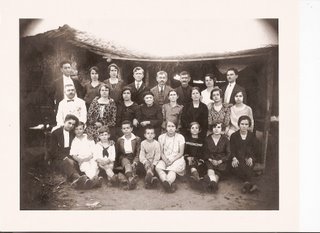
Left: My Mother Right: Me and Grandma with cousins Jim, Mike, Kathy and Tom.


My 2nd Great Grandmothers, Malissa Joslin Brubaker Bower and Lovina Berlin Yarian with my aunt Phyllis Phend, about 1924.

Today being Mother's Day, I spent most of the day with Mom, just the two of us. It was a very pleasant day. That being said, my tribute for Mother's Day will not be for her, but for all the mothers that came before to get us to this time and place... some known, some unknown. Here are the known, through my Mother and back eight generations:

Hazlette (Brubaker) Phend Dunn Ferguson (1902-1984) Indiana

Maude Catherine (Wise) Brubaker Yontz (1877-1953) Indiana
Susie Lula (Yarian) Phend (1872-1956) Indiana

Louisa (Fisher) Phend (1827-1898) Germany, Ohio, Indiana
Lovina Viola (Berlin) Yarian (1845-1932) Ohio, Indiana
Malissa Mariah (Joslin) Brubaker Bower (1849-1937) Indiana
Sophia Elizabeth (Dunfee) Wise (1850-1916) Indiana

Susanna (Kübli) Phend (1785-1856) Switzerland, Ohio, Indiana
Christenia (Houck) Fisher (1805- ? ) Germany, Ohio
Elizabeth (Switzer) Yarian (1815-1894) Ohio
Susannah (Hoffman) Berlin (1804-1880) Ohio, Indiana
Sarah (Foster) Parkison (1818-1904) Ohio, Indiana
Lydia (Robison) Joslin (1825-1899) Ohio, Indiana
Malissa Ann (Stem) Wise (1833-1901) Ohio, Indiana
Catherine (Jones) Dunfee (1829-1903) Ohio, Indiana

Catharina Phend (1754-1797) Switzerland
Verena (Laederich) Kübli (1747-1824) Switzerland
Eva (Rupert) Yarian (1786-1866) Pennsylvania, Ohio
Mary Catherine - wife of Jacob Switzer (about 1790 - ? ) Pennsylvania, Ohio
Juliana (Dietzler) Berlin (about 1772 - ? ) Pennsylvania
Catherine (Coy) Hoffman (1779-1852) Maryland, Ohio
Nancy (Neel) Brubaker (1797-1851) Ohio
Margaret "Peggy" (Myers) Foster (1797-1820) Ohio
Abigail (Goodrich) Joslin (about 1805-after 1882) Ohio, Indiana
Anna - wife of Henry Robison (about 1794 - ? ) Ohio, Indiana
Christena - wife of Peter Wise (1801-1884) Ohio, Indiana
Indiana (Sisley) Stem (1809-1888) Pennsylvania, Ohio, Indiana
Sophia Elizabeth (Hazlett) Dunfee (1794-1864) Ohio, Indiana
Elizabeth (Helms) Jones (1804-1883) Ohio, Indiana

Magdalena (Tschiemer) Phend (1722-1797) Switzerland
Anna (Frutiger) Kübli (1720-1790) Switzerland
Margaretha (Williams) Yerion (1745-1833) Pennsylvania
Susan (Wagner) Berlin (about 1744 - ? ) Pennsylvania
Susanna (Alder) Hoffman (about 1760 - ? ) Pennsylvania, Ohio
Mary - wife of Henry Coy (about 1755 - about 1785) Maryland, Pennsylvania
Elizabeth (Steinweg) Brubaker (about 1765-about 1821) Pennsylvania
Rebecca (Franks) Neel (1768- ? ) Pennsylvania, Ohio
Magdalena (Daniel) Foster (1755-1823) Virginia, Ohio
Margaret - wife of John Myers (about 1770- ? ) Ohio
Ruth (Dyer) Joslin (1771-1830) Vermont, Ohio
Sally (Church) Goodrich (1780-about 1831) Connecticut, Ohio
Margaret (Ellis) Sisley (1773-1870) Pennsylvania
Mary - wife of George Dunfee (about 1760 - ?) Maryland, Pennsylvania, Ohio
Elizabeth - wife of Jonathan Hazlett (1762-1848) Maryland, Pennsylvania, Ohio
Mary (Swigart) Helms (1777- ? ) Pennsylvania, Ohio, Indiana

Barbara (Zwahlen) Phend (1701- ? ) Switzerland
Margreth (Egger) Tschiemer (about 1695- ? ) Switzerland
Maria Magdalena - wife of Mathias Jurion (1705-1763) Pennsylvania
Anna Margarita (Euler) Berlin (about 1720-about 1807) Pennsylvania
Anna Elizabeth (Andriges) Kau (about 1720- ? ) the Pfalz ?
Christina Barbara (Kleist) Daniel (1734-1770) Pennsylvania
Sarah (Tarbell) Joslin (1741-1810) Massachusetts
Abigail (Price) Goodrich (1754-1827) Connecticut, Ohio


Lucy (Wilder) Joslin (1715- ? ) Massachusetts
Elizabeth (Bowers) Tarbell (1707-1756) Massachusetts
Sarah (Dewey) Goodrich (1712-1782) Connecticut

[note: Updated with some links and additional names May 11, ..]

Death Valley :: Sunset

Thursday, August 9, 2012

Tuffee Herding

Tuffee is our Border Collie. She was 6 years old as of Feb. 15. As you may know BC's are herding dogs. So Tuffee is determained to herd our horses since we don't have any sheep. In this photo she is trying to herd Sundance, my paint gelding. But horses don't herd as well as sheep do. So instead of moving like Tuffee wants him to do. He will just stand there and once in a while raise a back hoof to threaten her or to tell her to leave him alone. When she botheres him to much he will make a half hearted kick at her. He has been known to actually kick her enough to make her yelp but never enough to actually hurt her. So Far. And I hope he never does. Two of our other horses, Nita and Star treat her the same way. But Trave, one of the ponies will only take her "herding" so long and then he will charge at her and try to stomp her with his front hooves. The dumb dog doesn't seem to learn not to bother the horses. Maybe it is her way of finding adventure in an otherwise dull life. When I see she has bugged him enough I tell her to get OUT. She knows that means to leave him alone and get out of his pen. I am glad she only trys to herd the horses when I am out in the pen with them. She never goes in their pens when I am not in there.

Sunday, August 5, 2012

Light at the end of the tunnel?

A good deal of my time so far this summer has been consumed with scanning pictures and preparing pictures for scanning. On June 2nd I reported that another 970 pictures had been scanned since mid-May, plus the 575 pictures of mom's that had been scanned in April.

For the heck of it, I decided to keep track of how much time was spent in scanning. In hindsight I probably should have tracked how much time was spent in preparing the pictures for scanning as well. Once I started on the magnetic albums, it's highly likely that as much time was spent in prep as in actual scanning.

The prep work consisted of removing the pictures from the albums, sorting them into the order in which they were to be scanned, then attaching them to archival paper. After fiddling with trying to put multiple pictures on the scanner bed and getting irritated with them moving when the cover was lowered (due to static), I decided to put the pictures on the pages where I wanted them, add captions as needed, then individually scan the pictures along with their corresponding captions. Too bad I didn't think of that when I was scanning mom's first album. Something to keep in mind for the next one!

Out of the past 48 days, scanning was done on 21 of them, usually 2-3 hours a day but occasionally 4 hours. One day I was on a roll and spent 6 hours scanning! I'm not totally crazy, it wasn't all at one sitting. I did get up a few times to stretch my legs and grab a bite to eat. And yes, I washed my hands after eating and before handling the pictures! Anyway, a total of 70 hours of scanning in 21 days netted another 2278 images. That's an average of 3.3 hours and 108.5 images per day.

That takes care of my personal albums. There are still a few more of Mom's to do. Next up will be the genealogy documents. But, they too need to be sorted prior to scanning. I've mentioned before that with my filing system I put documents of the same type together, regardless of who they are for, whether an ancestor or other relative, giving each document a number. I could find them easily because of the numbering system and the fact that when something was entered in my database the document number was entered for reference, so all I needed to do was look up the person in the database to see where the document was filed. But that system isn't really intuitive and I need to make it easier for whomever will take over my research (assuming there is a family member who wants it or in case it gets donated to a library or society). So that means sorting and putting the documents together for a given person or family. I haven't decided yet whether I'll scan "everything" or just the ancestral documents. "Everything" includes a lot. I think, after I've sorted through stuff I'll do the ancestors first and save the rest for another time. I want to get back to researching! And doing other things. But at the least, I want to get the ancestor documents scanned.

There may not yet be light at the end of the tunnel, but it will be there one day. Soon, I hope.

The picture below was taken in September 1978 while I was stationed in Japan. Above the Clouds. Sunrise from the top of Mt. Fuji. There is a story to tell that goes along with the picture, but it'll have to wait for another time.

Photo Copyright © 1978/.. by Rebeckah R. Wiseman

Jemez Fire Smoke

These are photos I took from my yard of the smoke cloud that we can see of the Jemez fire that is near Los Alamas, New Mexico. It does look like a normal cloud but it really is smoke. We have seen it every day since the fire started last Sunday. This morning it had come over us even more and is making it hard to breath. We hope they get it stopped soon. The Los Conchas fire is now said to be the largest in New Mexico history as the Wallow fire is the largest in Arizona history.


Friday, August 3, 2012

Velo Withdrawal

Earlier I posted about having to stay off the bike for a few weeks after a minor injury. It is now week 2 and I am climbing the walls. My mood, energy levels, and general sense of well being have plummeted after the velo-induced high of the past few months. I want to be on my favourite path, blissfully flying past the river and the meadows!

The addictive and stress-reducing qualities of cycling that many report are fairly typical reactions to aerobic exercise. Yet, I have never had this sort of response to any other form of physical activity. I hate jogging and going to the gym, and I get worn out by any sort of sport within minutes. This makes it especially difficult to explain how I am able to cycle for hours without getting tired.

It is not long now until I am able to cycle again. Still, this "withdrawal" is difficult to endure. How do you deal with having to take a break from cycling -- be it due to travel, weather conditions, health, or other obstacles?

The Residence of John Brubaker

I'll admit it. Oftentimes, as I've perused the old county atlas books, I've been somewhat envious of the beautiful engravings of family farms within their pages. I always thought it would be "neat" to have one of my families included but they just weren't there, at least not in the books I've looked at! Several years ago, my uncle gave me some of the pictures and other papers that he had gotten when his mother (my grandmother) died. There were pictures I had never seen before, at least not that I remember having seen before. Among them, the image below, which shows the residence of John Brubaker, my 3rd great grandfather.


Yellow and faded, securely attached to a piece of heavy cardboard, it just barely fit on the flatbed scanner. How and when did my grandmother come into possession of this picture? Well, that's a good question. In that box from my uncle, there were also some pictures of Thornton Brubaker and his family as well as several of the children of Samuel Brubaker. They were John's sons and half-brothers of my 2nd great-grandfather, William Brubaker. My guess would be that whomever gave her those pictures also gave her the picture of John's residence. Wherever she got them, I'm sure glad she kept them!

I've seen the "Combination Atlas Map of Huntington County, Indiana" published in 1879, but I don't recall seeing this image in it. Yesterday, I decided to see what other atlases had been published in the late 1880s. The first thing that came up on Google search was a hit on the David Rumsey Collection! Turns out, the image above was printed on page 125 (center of page, left side) of the "Illustrated Historical Atlas of the State of Indiana" which was published by Baskin, Forster & Co., Chicago, 1876. Engraved & Printed by Chas. Shober & Co. Props. of Chicago Lithographing Co.

What is great about it being in the David Rumsey Collection is that you can zoom in and enlarge the pages. The detail in the images on the Rumsey site is incredible. A map of Huntington County is on page 66 of the atlas. The "homepage" of the atlas shows that there are 187 images covering all 92 counties of the state.

Thanks to an unknown benefactor many years ago, my grandmother, and my uncle, I have a very nice piece of my family history. One of these days I'm going to make the trip to Huntington County (it's only about a 40 minute drive) and see if I can find his farm. I doubt that the house is still standing, but it's possible...

Thursday, August 2, 2012

Pulling the Trigger vs Doing the Twist: Thoughts on 3-Speed Gear Shifters

On bicycles with internally geared hubs, we typically see two types of gear shifters. The trigger shifter (pictured above) is a small gadget with a lever that is moved up and down. Today, this style of shifter usually accompanies Sturmey Archer hubs (though in Europe I have seen some lesser known models as well).


The twist shifter (pictured above) is a plastic and rubber enclosure that is built into the handlebar grip itself. To switch gears, you grab the rubber part and twist forward or backward. This style of shifter usually accompaniesShimanohubs.


After using both types of shifters on various bicycles I've owned to more or less the same extent, I have developed a strong preference for trigger shifters. When I tell people this, they tend to assume it has to do with "vintage aesthetics" - but actually, it has to do with comfort. A trigger shifter takes up very little space on the handlebars, as it is attached with a narrow bracket. This means that the shifter does not interfere with the gripping area, and allows me to install full-length grips on the handlebars.


By contrast, having a twist shifter installed effectively cuts your gripping area in half. Notice that the right handlebar grip on the Bella Ciao above is shorter than the left grip - necessary in order to make room for the shifter. Granted, you can also keep your right hand on the rubber portion of the shifter itself - but it's not very comfortable, especially as there is a tactile break between where the real grip ends and the shifter begins.


But why is it important how long your grips are, as long as you are able to fit your hands on them? The reason, is that having room to move your hands around on the handlebars, even a little, can be essential for hand comfort - especially on long rides. If you ride your bicycle for just a couple of miles or so at a time, then you might not get the urge to move your hands around. But the longer your ride is, the more fatigued your hands will get if you keep them in the same position. Some people are more sensitive to this than others, and those who have nerve damage in their hands (like yours truly) are particularly prone to it. The feeling can range from numbness, to "pins and needles" to a more severe sensation of electric current running through the hand. It is not good to experience this problem, and having room on the handlebars to move your hands around allows you to avoid it. Long gripscan also help you switch between a more relaxed and a more aggressive position on your bike (by holding the grips further forward or further backward) - giving you some added control over speed.


Getting back to shifter styles, here is my right hand on the shortened grip that is integrated with the twist shifter on my Bella Ciao. As you can see, my hand covers the entire grip, with no room to move around - unless I place it on the shifter itself, though even then it is limited. And I had the same problem with this shifter on my previously-owned Pashley, which came with the 7-speed Shimano hub I innocently selected.


On the other hand, here is my hand on the grip I installed on my Gazelle. As you can see, there is room for another handful - which is only possible because of the trigger shifter.


I will note that one benefit of the twist shifter, is that it is more integrated with your hand position - which can be a plus if you switch gears very frequently. But on bicycles with internally geared hubs - especially 3-speeds - I have found that I tend to stay in one "ideal" gear most of the time, switching to a lower gear only when going uphill, and switching to a higher gear only when cycling very fast or downhill. Having to reach with my finger to pull the trigger has not caused me any inconvenience in comparison to using the twist shifter. Your experience, of course, may differ.


While I am not suggesting that everybody ought to run out and demand trigger shifters with their 3-speed bicycles, I am hoping that this comparison will provide some food for thought to those who are getting a new bike, or deciding which hub to select with a new build. I would also like to ask whether anybody knows where I can find a trigger shifter that is compatible with a 3-speed Shimano Nexus hub? Even if it involves rigging something up with a "thumbie" derailleur-style shifter, I am up for it. Thanks in advance for any advice.