 This bumble bee was sampling the flowers on my vitex bush.
Monday, December 31, 2012

Happy Birthday to the former Boy Boy

When Austin was little, Nathan called him "my boy". That somehow then changed into "the boy". Usually that name was used in this sentence: Guess what the boy did now! At some point Austin decided he wanted more and started to call himself the boy boy. So the boy boy it was.
Seventeen years ago, this boy boy came into our family and I can think of very few things that have altered the family quite like it. To say he made things more interesting is an understatement. It has been an honor and joy to have him in our lives. Today as I shared with him what his birth and life with us has meant to me personally, I had to also admit that he is no longer our boy boy. He is almost a man now. A young man at the very least. And we most likely have very little time left with him sharing a home with us. So I'm savoring the time left.
We squeezed in a birthday lunch at the Chinese Buffet because he had to work tonight. We bought him a red velvet cake that we then promptly ate 1/4 of. And I promised him a trip where he can cash in his birthday gift money and do something he wants to. It was not the big party I would have loved to have thrown for him but we still celebrated how special the day was. It was good.
Happy Birthday, Austin. There is a part of me that will always see the little boy in you. And the other part of me sees the wonderful young man you are also.
Friday, December 28, 2012
Redbud at Night


I took the dogs out about 2 am the other night and noticed that the light that had been moved recently was shining on the blossoms of the redbud. I got the camera and tried a couple of shots. Had to work with it a bit to get the right setting but thought that the effect on all 3 photos was at least different.
French Inspirations: Beautiful Oddities
As a change from the Cape Cod theme, I would like to share these photos of some early French bicycles from the collection of Nick March. These pre-war bicycles are not quite mixtes, but they are not classic step-throughs either. Whatever their construction, they have an overall grace and elegance that I find inspiring.
 This beauty is a very rare bicycle by Caminade (see here for additional details).
 What makes it truly exceptional, is that the frame is alloy, with hexagonal(!) tubing and elaborate lugs. I have never seen a bicycle with hexagonal tubes before, so these photos blew my mind. I wonder what it feels like to ride this creation.
 In the close-up photos, it appears as if the lugs might be bolted to the tubing, but I am out of my depth here. Any further details regarding the construction of this bicycle are welcome. This is definitely one of the most exceptional ladies' bicycles out there, and the condition in which it has been preserved is amazing.
 This sage green bicycle is an Alcyon from the late 1930s. The mixte-like construction has twin stays that curve sharply at the seat tube, then connect to the lower part of the rear stays. One of the elements of early French ladies and mixte bicycles that appeals to me, is the colour scheme: The combination of pastel blue-green paint and chrome accesories takes my breath away - even when the bicycle is old and rusty and the paint is faded.
 This ancient Helium is another example of the faded pastel green paint I love. Notice the curved stays again, which I have also documented on many bicycles in Vienna. The twin stays extend all the way to the rear drop-outs, but is the bicycle technically considered a mixte if the stays are curved in this manner? I assume the purpose of this design was to lower the step-over height, but what effect does it have on the bicycle's structural integrity?
Largely dilapidated, the Helium in the photo is in her owner's "destined for the trash" pile. I wish I could wisk it away to a bicycle history museum. My thanks again to Mr. March for permission to use these images; they are a treat to see.
This beauty is a very rare bicycle by Caminade (see here for additional details).What makes it truly exceptional, is that the frame is alloy, with hexagonal(!) tubing and elaborate lugs. I have never seen a bicycle with hexagonal tubes before, so these photos blew my mind. I wonder what it feels like to ride this creation.In the close-up photos, it appears as if the lugs might be bolted to the tubing, but I am out of my depth here. Any further details regarding the construction of this bicycle are welcome. This is definitely one of the most exceptional ladies' bicycles out there, and the condition in which it has been preserved is amazing.This sage green bicycle is an Alcyon from the late 1930s. The mixte-like construction has twin stays that curve sharply at the seat tube, then connect to the lower part of the rear stays. One of the elements of early French ladies and mixte bicycles that appeals to me, is the colour scheme: The combination of pastel blue-green paint and chrome accesories takes my breath away - even when the bicycle is old and rusty and the paint is faded.This ancient Helium is another example of the faded pastel green paint I love. Notice the curved stays again, which I have also documented on many bicycles in Vienna. The twin stays extend all the way to the rear drop-outs, but is the bicycle technically considered a mixte if the stays are curved in this manner? I assume the purpose of this design was to lower the step-over height, but what effect does it have on the bicycle's structural integrity?Largely dilapidated, the Helium in the photo is in her owner's "destined for the trash" pile. I wish I could wisk it away to a bicycle history museum. My thanks again to Mr. March for permission to use these images; they are a treat to see.
Thursday, December 27, 2012
Cynthia Rowley Bike on Newbury Street
 Including bicycles in shop window displays seems to be the new thing, and some fashion designers are even making their own. Cynthia Rowley beach cruisers are now available for sale in her shops, including the one on Newbury Street in Boston.
 Cynthia Rowley clothing has a flirty, girly, 1950's-era feel to it, so the beach cruiser seems an appropriate complement. I wonder how many people out there are buying designer bicycles. The Rowley cruiser is certainly a more affordable alternative to the Fendi Abici!
Wednesday, December 26, 2012
I/O Merino and jjobrienclimbing&style
Climbers, you know I love wool. So I felt an instant affiliation when I got the chance to shoot some promos for South Aussie company I/O Merino.
This is the first of several posts we'll be doing for io. It's good looking gear, and the Principal Style Editors at jjobrienclimbing&style are psyched to be involved.
Look out for the mens collection too.

Remember my Strictly No Synthetics tour of Tibet and Everest base?
Silk, Cashmere and Merino. Love the stuff.

The promotional photographic team at jjobrienclimbing&style, after some deliberation, decided the best approach for this job was to put one of theses merino tops on an awesome climber, get her on a classic steep route, put her through her paces, and take a sheepload of photos. And they did.

Issy cranking hard on a hot 35 degree October day. Climber and top still working at peak performance.

Issy twists and stretches, like only she can, but that merino keeps up with every move.
Neither climbing nor style was ever in danger of compromise.

"The I/O Sport Crop Top is a snug sports bra that wil feel luxurious against your skin whilst keeping your chest warm. It is designed with flat seams and no scratch tags so that it will hug your body and feel fantastic all day". $39.95

Stop press: Justfor being loyal and stylishfollowers of jjobrienclimbing, you can use the discount code iom30 and get 30% off when shopping online. Click the icon to go to the store.

Turns out wool is good for climbing. Who knew?

Look out for the logo. jjobrienclimbing endorses it. You should too.

& jjobrienclimbing
Thursday, December 20, 2012
In Appreciation of John Forester

Browsing theDFW Point to Point blog the other day, I learned about the recent release of the 7th edition of John Forester's Effective Cycling - that classic tome espousing the vehicular cycling philosophy. Thinking about this book, I feel great affection toward my own tattered blue copy.
When it comes to bicycle infrastructure, Metro Boston has changed considerably since I first began riding here. In Spring the majority of my routes involved traveling along streets with no infrastructure what so ever. When I discovered Vehicular Cycling, I thus interpreted it not as something that was a matter of agreeing or disagreeing with, but as a necessary tool for the realities of my environment. John Forester believes that bicyclists should behave like vehicles, sharing roads with motorised traffic. Effective Cycling gives precise and detailed instructions on how to do that.
As an absolute beginner, I purchased an older edition of the book and found it immensely helpful. It educated me about traffic maneuvers from the bottom up: Starting with very basic concepts that I was able to implement right away, then getting into more nuanced ideas that became useful once I gained a bit of experience and courage. And just as importantly, Effective Cycling got me into an "I can do this. I have a right to do this." frame of mind. It seems almost hard to believe now, but at the time I was often the only bicyclist out on the roads and there were no social or infrastructural cues to indicate that it was okay to ride a bike on the street. No sharrows, no "share the road" signs, no other people on bikes. Drivers would routinely shout "You're not supposed to be here!" at me, incredulous at my very presence. Effective Cycling gave me the confidence and the skills to operate in that kind of environment, and to do it safely.
Today there are bike lanes, sharrows and signage along most of my routes through the city. There are also many other cyclists out on the roads. The combined effect of this has been an increased awareness and acceptance of bicycling. The infrastructure here is far from perfect. The drivers are still far from nice. But nonetheless things are much better than they were three years ago. There is less hostility, less stress. It no longer seems abnormal to ride in the city, and cycling feels more accessible to beginners.
Extreme proponents of the Vehicular Cycling philosophy are against bicycling infrastructure of any kind, believing that separated paths and bike lanes are not in the best interest of cyclists. Often they will actively fight against infrastructure, making it a point to attend town meetings and speak out against it. Conversely, those who favour infrastructure tend to position themselves against Vehicular Cycling, viewing it is a discredited philosophy and a lost cause. But from where I stand, this battle manufactures an unnecessary and ultimately damaging dichotomy.
While I have experienced the benefits of cycling infrastructure firsthand, I nonetheless find the principles of Vehicular Cycling indispensable in environments where said infrastructure is unavailable or imperfect - or when I choose to operate a bicycle on the open road for other reasons. I do not agree with John Forester on every point, but I value much of his advice on riding in traffic. I would encourage cyclists of all persuasions to keep an open mind and give Effective Cycling a read.
Wednesday, December 19, 2012
Herding Water?

Tuffee is so determained to 'herd' something she trys to 'herd' the water coming out of the water hose.
Sunday, December 16, 2012
Underneath the Pavement

Though it's been a week since the Vermont Fall Classic, I still cannot post a report. My heart is too full; this is a ride that requires some emotional rest and distance before it can be put into words. But privately some of us have been discussing it, rehashing it, testing the accuracy of our own memories by comparing them against the memories of others'. And one topic that's come up is the quality of the dirt. A few of us noticed that it was differed from our local dirt, and different from the dirt we rode in previous events. At the D2R2 in Massachusetts and Southern Vermont, the unpaved roads were a dark brown earthy colour that turned muddy when wet. At the Kearsarge Classic in New Hampshire, the terrain was rocky. The dirt roads in Northern Vermont were a light grayish-tan, almost clay-like in consistency, dusty and tightly packed except for a thin top layer that was soft from the rains of previous days. When it began to rain again, this top layer turned liquid, but not muddy exactly. It was thinner than mud, less viscous. I was certain it was some type of clay. Others thought it was more sand-like. A rider who often cycles in upstate New York then described the dirt roads there, which are reddish clay and leave a pink residue over everything. Fascinated by these nuances, we admitted that we never gave them much thought until now.
All of this makes me realise just how unfamiliar so many of us are with the actual soil we live on. Paved roads have defined and homogenised our landscape for so long, that we hardly consider what lies beneath. Do most of us even know what our local streets would look like unpaved? The streets in the next town over? Can most of us determine what a particular type of soil is by looking at it or feeling it? I was in touch with these things when I lived in the countryside, had a garden, walked in the woods, but living in the city has distanced me from that awareness. Now cycling on dirt through different parts of New England has reminded me just how important it is. I'd like to learn more about our region's terrain, about what lies underneath the pavement. I don't ever want to lose that connection again.
Saturday, December 15, 2012

Friday, December 14, 2012
Charlie Borgh
If everyone will please pardon my digression from the immediate issues of Mount Rainier, so that I can talk about my friend Charlie Borgh.
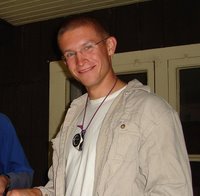 I met Charlie on a trip to Mount Rainier’s summit. During the ascent, and subsequent overnight on the summit, it became clear to me that Charlie had a vision of his life. As a young man about to finish college, Charlie was amassing the skills and experiences to lead the life of an accomplished climber. I recognized the love and passion, and from that time on the summit, knew that mountains were going to be a big part of Charlie.
For the next four years, I witnessed Charlie develop as both a mountain climber and a park ranger. When it came to climbing, I can confidently say that few pursued the sport with as much diligence. He simply loved rock climbing and mountaineering, AND he was quite good at it. Physical and strong, Charlie moved through the mountains, over the rock, or up the ice with grace and confidence. He chose climbing routes that were beautiful, technical and challenging. He recently commented that in the last year he had done more climbing than most people in do in a lifetime… And if you spent much time with Charlie, you knew this was true.
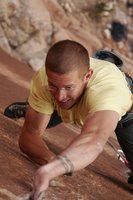 Charlie served as a National Park Service Climbing Ranger. He started as a volunteer at Camp Schurman, but quickly climbed the ranks to become a lead climbing ranger on Mount Rainier. Charlie’s assignments as a climbing ranger required him to delicately mix intense physical ability with sound judgment and excellent decision making. The job was adventurous and dynamic and that seemed to suit Charlie well. So well in fact, that he took assignments at Yosemite on the prestigous search and rescue team in Camp 4.
On Mount Rainier, he led climbing patrols and rescues. On more than one occasion, Charlie risked his life to save another. He didn’t do this carelessly, but purposefully and with confidence. He was an important part of our team, and I trusted him implicitly. Which was something he seemed to enjoy, trust. In fact, I say that Charlie blossomed when trusted, and the responsibility that came with it.
Maybe most impressively, was the simplicity at which Charlie enabled himself. He pursued a challenging path for his life and it was inspiring to watch. Charlie succeeded at most anything he set his mind to, and in succeeding, he led and motivated others to do the same. He made choices that reflected his soul and passion; he was living his life with purpose and direction, things that we all can look up to.
Here are few links to stories about Charlie. Charlie Borgh loved climbing, despite danger. These two require free registration but tell the story of a dramatic rescue in 2004 that Charlie took part in. In the Seattle PI, Injured climber dies after rescue and in the Seattle Times, Injured mountain climber dies after daring rescue.
Information about the accident was posted here. In the next few days, I'll put more up about Gabe Coler, Mount Deltaform and a Pacific NW memorial for Charlie.
 I met Charlie on a trip to Mount Rainier’s summit. During the ascent, and subsequent overnight on the summit, it became clear to me that Charlie had a vision of his life. As a young man about to finish college, Charlie was amassing the skills and experiences to lead the life of an accomplished climber. I recognized the love and passion, and from that time on the summit, knew that mountains were going to be a big part of Charlie.
For the next four years, I witnessed Charlie develop as both a mountain climber and a park ranger. When it came to climbing, I can confidently say that few pursued the sport with as much diligence. He simply loved rock climbing and mountaineering, AND he was quite good at it. Physical and strong, Charlie moved through the mountains, over the rock, or up the ice with grace and confidence. He chose climbing routes that were beautiful, technical and challenging. He recently commented that in the last year he had done more climbing than most people in do in a lifetime… And if you spent much time with Charlie, you knew this was true.
 Charlie served as a National Park Service Climbing Ranger. He started as a volunteer at Camp Schurman, but quickly climbed the ranks to become a lead climbing ranger on Mount Rainier. Charlie’s assignments as a climbing ranger required him to delicately mix intense physical ability with sound judgment and excellent decision making. The job was adventurous and dynamic and that seemed to suit Charlie well. So well in fact, that he took assignments at Yosemite on the prestigous search and rescue team in Camp 4.
On Mount Rainier, he led climbing patrols and rescues. On more than one occasion, Charlie risked his life to save another. He didn’t do this carelessly, but purposefully and with confidence. He was an important part of our team, and I trusted him implicitly. Which was something he seemed to enjoy, trust. In fact, I say that Charlie blossomed when trusted, and the responsibility that came with it.
Maybe most impressively, was the simplicity at which Charlie enabled himself. He pursued a challenging path for his life and it was inspiring to watch. Charlie succeeded at most anything he set his mind to, and in succeeding, he led and motivated others to do the same. He made choices that reflected his soul and passion; he was living his life with purpose and direction, things that we all can look up to.
Here are few links to stories about Charlie. Charlie Borgh loved climbing, despite danger. These two require free registration but tell the story of a dramatic rescue in 2004 that Charlie took part in. In the Seattle PI, Injured climber dies after rescue and in the Seattle Times, Injured mountain climber dies after daring rescue.
Information about the accident was posted here. In the next few days, I'll put more up about Gabe Coler, Mount Deltaform and a Pacific NW memorial for Charlie.
Wednesday, December 12, 2012
Waiting to actually try on Bellavista

Last month after the Eiger I came to the Dolomites with Calum to have a go at Bellavista, Alex Huber’s famous 8c on the north face of Cima Ovest. We had one day on it when it was wet and then had to leave when faced with a forecast of a week of thunderstorms.
Not liking being defeated, I hastily arranged a return in September for a long shot week on it with Alan Cassidy. A long shot because it might be getting a little cold by then for alpine north face 8c. The roof pitches on Bellavista suffer from dampness a lot. Sometimes, it’s just damp, and it’s ok for getting on it, if a little slippery. But this time it’s been just wet, soaking bloody wet.And when it's not wet, it's full on winter.
On our first day it was actually a bit drier, but about minus 2 with a strong gusty wind bringing in some snow flurries. I went for a session in the roof and made a bit of progress even though I was shivering quite amusingly by the time I got back to the belay. Alan took one look at me from the comfort of the belay jacket and opted to go down. Sensible.
After that it did warm up to around 3 or 4 degrees on the wall, but the warm humid air on freezing rock made it soaking. We opted to go up and do the 8a pitch above the 8c which we both could do pretty easily despite the wetness.
Overnight and this morning the conditions have turned back to full on blizzards and so once again we are sitting it out. We have a couple more days but It’s looking almost certain that if it warms up again it’ll take longer than that for the slime to dry off that roof.
Nevermind, at least we have tried. And I have done a lot of writing...


Friday, December 7, 2012
Argonaut Peak

The climbing season would not be complete without a trip to the Stuart Range. It was hot out, so the icy water in Ingalls Creek felt pretty good. We camped right beside the creek.

The group breaking out above the tree line.

There was snow and running water on the south side.

We went most of the way up the south side together, then split up and assaulted the summit from different routes.

Jason starting up the NW Arete.

Part of our group on the summit.
 |
| Mark and Nicholas. Mt. Stuart in the background. |
 |
| Dave and Andrew |
 |
| Doug and Jason |
 |
| Kyle |
Mixte Lovers, Rejoice: VO Prepares a Little Something
Some of you know that I have been considering a custom bike for next spring. It has been a somewhat tortured search, because of my pickiness when it comes to things like lugs and stylistic detail. Basically, I want the mixte to have the classic twin lateral stays (as opposed to a single top tube), and I want it to be fully lugged (which is nearly impossible to achieve nowadays, as mixte lugs are no longer made). To get the kind of bicycle I want, I basically had three choices : (1) to go with a builder who can hand-make the lugs, (2) to go with a builder who can alter lugs meant for diamond frames into mixte lugs, or (3) to find a builder who has a stash of NOS (new old stock) mixte lugs that they would be willing to use. All three choices are rather costly, and I am not sure whether I am in a position to commit those kinds of funds to the purchase of a bicycle. A more economical option like Rivendell was not possible, because although beautifully lugged, their mixtes are the type with the single top tube.
 [image from Velo-Orange]
Enter Velo Orange, which announced in their recent blog entry the release of a fully lugged mixte with twin lateral stays. Thank you, Mr. Kulczycki! The photo above is a prototype frame.
 [image from Velo-Orange]
Here is a close-up of the lugs. The projected price is $700 for the frame and fork (!), and the anticipated delivery date is January . Three sizes will be available: 50cm, 54cm, and 57cm, making it accessible for both short and tall riders.
What I love about this frame:
. the lugs,
. the classic construction with the twin stays,
. the choice in sizing (54cm should be just perfect for me),
. the 700c wheels (larger than the wheels on the Betty Foy, which I found too small)
. and the excellent price.
What I don't love so much:
. the colour (if I order it, I would definitely get custom colour or have it repainted),
. the way the rear stays connect to the seat tube (I think this could be more elegantly done),
. and the fact that, like the Rivendell Betty Foy, it is made in the far East.
So what do you think? Regardless of whether I decide to go for this bike, I am very excited that this product has appeared on the market. Now, if only I can persuade VO to alter the rear stay connexions and change the production colour...
[image from Velo-Orange]Enter Velo Orange, which announced in their recent blog entry the release of a fully lugged mixte with twin lateral stays. Thank you, Mr. Kulczycki! The photo above is a prototype frame.
[image from Velo-Orange]Here is a close-up of the lugs. The projected price is $700 for the frame and fork (!), and the anticipated delivery date is January . Three sizes will be available: 50cm, 54cm, and 57cm, making it accessible for both short and tall riders.
What I love about this frame:
. the lugs,
. the classic construction with the twin stays,
. the choice in sizing (54cm should be just perfect for me),
. the 700c wheels (larger than the wheels on the Betty Foy, which I found too small)
. and the excellent price.
What I don't love so much:
. the colour (if I order it, I would definitely get custom colour or have it repainted),
. the way the rear stays connect to the seat tube (I think this could be more elegantly done),
. and the fact that, like the Rivendell Betty Foy, it is made in the far East.
So what do you think? Regardless of whether I decide to go for this bike, I am very excited that this product has appeared on the market. Now, if only I can persuade VO to alter the rear stay connexions and change the production colour...
Thursday, December 6, 2012
Selle AnAtomica: My Impressions

[Edited to add: This review is of the older generation Selle Anatomica Titanico; the review of the current model can be found here.]
Some time ago I bought a red Selle Anatomica Titanico saddle, initially to go with a vintage bicycle I had at the time. But when I was loaned a Seven roadbike earlier this summer, the Selle Anatomica migrated onto it instead: It promised to be more comfortable than the bike's native racing saddle and was a perfect match for its red decals. This is how I had the saddle set up on the bike, and I put about 700 miles on it.

Founded in 2007 by the now deceased avid cyclist Tom Milton,Selle Anatomica is a small American manufacturer of leather saddles. The company is now run by the founder's sister, Meredith Milton Evans. Notably different from the other leather saddles on the market, Selle Anatomica offers several potentially attractive selling points. One is the long "anatomic" cut-out, which they claim allows the two sides of the saddle to move independently, thus relieving pressure on soft tissue. The other is the "watershed leather," which refers to the saddle's treatment with a waterproof top layer. The saddles are available in a variety of colours, and there are separate versions rated for heavier and lighter riders. You can read more about the design and specs here.

I purchased my saddle in Spring and since then a couple of changes have been made that I find somewhat confusing but will try to summarise. Selle Anatomica now advertises being made with cro-moly rails, so I am not sure what the rails on my saddle are made of. They also changed the weight criteria, so that what were formerly called the "Clydesdale" saddles and recommended for persons weighting over 180 lb have now become their regular saddles and are recommended for persons over 140 lb. If I understand these changes correctly, then what is now called the "Titanico" model is a slightly different product from the saddle I own, and the version I own is more comparableto what is now called the "Titanico Legacy." However, based on my conversations with the manufacturer I am not entirely certain of this, and I hope that she might clarify in the comments.

My impressions of the Selle Anatomicaunderwent several stages. Initially, the saddle felt so comfortable that I could hardly believe it. The tension of the leather was just right, there was no pressure anywhere, and the cut-out slot worked as advertised. The leather was softer, more pliable and more "hammock-like" than other leather saddles I'd tried and I could feel it moving with me, as opposed to my body moving against it. There was no chafing or soreness what so ever, and there was no breaking in period. It was almost too good to be true.

Then, after about 100 miles, I began to feel a sharp pinching pain in my "soft tissue." The pain would come and go, seemingly at random, and felt as if someone took a pair of pliers to a fold of skin along my crotch. Eventually I realised that the slot somehow began to close in at its narrowest part, pinching my skin right through the padded bicycle shorts. Soon after that I also noticed that (after only 150 miles), the saddle had sagged dramatically. At the time we were unable to determine whether it was the actual leather that sagged, or whether the bolt controlling the tension had unscrewed. But in retrospect it seems to have been the latter, because once we increased the tension and screwed the bolt in tightly, it did not sag again nearly as much.
We assumed that tensioning the saddle would also solve the pinching problem, but the occasional pinching persisted. We tried bending the leather inward in the part of the slot where it pinched, but that did not help. After some investigation, it turned out that a few others reported this same problem with Selle Anatomica saddles, and the recommended solution was to use a knife to enlarge the slot in the spot where it pinched. Just as we were debating whether to do this, the pinching suddenly stopped on its own around mile 400. I kept waiting for it to return, knife at the ready, but it did not. With no explanation, the saddle suddenly felt as good again as on the day I got it. For the remaining 300 miles I rode on the saddle, there has been a gradual and slight loss of tension, but no further problems.

Having ridden with this saddle in the rain multiple times on a bike with no fenders, I can confirm Selle Anatomica's claim that the saddle is absolutely waterproof. The rain just rolled right off without getting absorbed into the leather. However, the "watershed" layer eventually began to wear off - not from the rain, but from my contact with the saddle. You can see this in this picture, which was taken after 400 miles. On the manufacturer's website, it is suggested that the top layer could wear off over time as part of everyday use, and that eventually the owner may need to send the saddle back for re-waterproofing (which is done for an extra fee, as far as I understand). It is not specifed for how many miles the "watershed" leather is designed to last before the top layer needs to be reapplied.
Overall, my impression of Selle Anatomica is a positive, but somewhat frustrated one. If the tension remains as it should and the slot does not pinch, it is the most comfortable saddle I have ridden on. If the watershed layer remains intact, it is the most maintenance-free leather saddle I have experienced. However, neither of these factors has been stable for me, and so I would describe the saddle as high maintenance and rather unpredictable. With its price on par with mid-range Brooks and less than Berthoud, personally I would buy Selle Anatomica again and would be willing to fuss with it just to achieve the level of comfort I know it is capable of giving me. But be aware that this is an unusual saddle, and that user experiences tend to be varied - even more so than with the other leather saddle manufacturers. I hope that Selle Anatomica remains in business and continues to streamline its product. With its unique design, it is a welcome alternative to the other saddles currently on the market.
Subscribe to:
Comments (Atom)