 To the readers of Tumbleweed Crossing.
May you have Joy in your Heart, Pease in your Soul, and Happiness, and Freedom forever. From the Desert Windwriter of Tumbleweed Crossing
To the readers of Tumbleweed Crossing. A couple of weeks ago I wrote this post explaining why I do not believe that "Bike Month" is effective at making transportation cycling accessible to non-cyclists and beginners. In the discussion that followed, many different opinions were expressed - which I appreciate. In addition, a couple of readers suggested that, since I criticised the approach, perhaps I could follow up with my own ideas. If not bike month, then what alternative would I propose? That was a good point, and I have now prepared my response. This is far from the first time I've considered the issue. But it's one thing to have my head full of ideas, and quite another to express them lucidly. Let me give it a try.
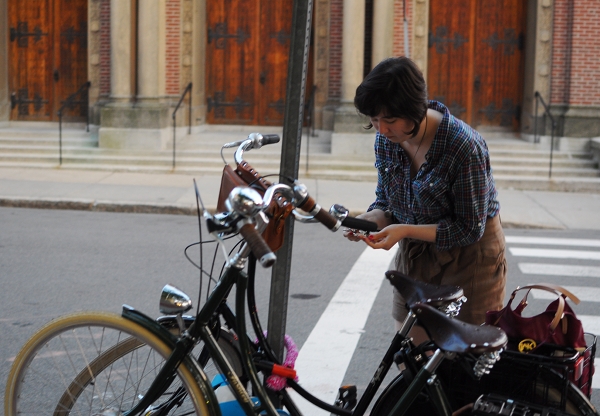 A Support System for CyclistsIf the goal of a city, community, or organisation is to make cycling an accessible form of transportation, I propose a year-round support system permanently in place. This support system could exist in the form of a small department within the local government structure, or in the form of an independently funded non-government organisation. The sole mission of this department or organisation would be to provide a range of services - in the form of literature, materials, counseling, classes and workshops, and more - to persons interested in transportation cycling. It is crucial that the office or organisation providing these services be non-partisan - which includes independence from political groups, environmental organisations, or any other entities with specific agendas to pursue. The goal of this office or organisation would not be to promote cycling, but to support cyclists or those considering cycling - which is a crucial distinction. Trained employees would work with person, families, and groups to determine their level of comfort, their concerns and their goals - responding appropriately and providing them with relevant resources. The existence of this office or organisation would be made known to the public via an online presence, via brochures available at relevant local venus, and via announcements in the local media.
 A "How, Not Why" Approach
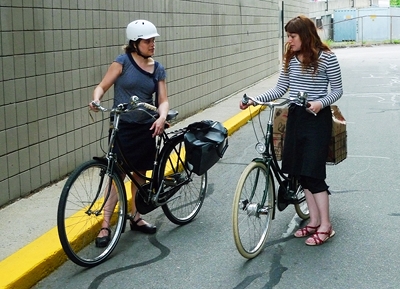 Ideas for a How-To Brochure
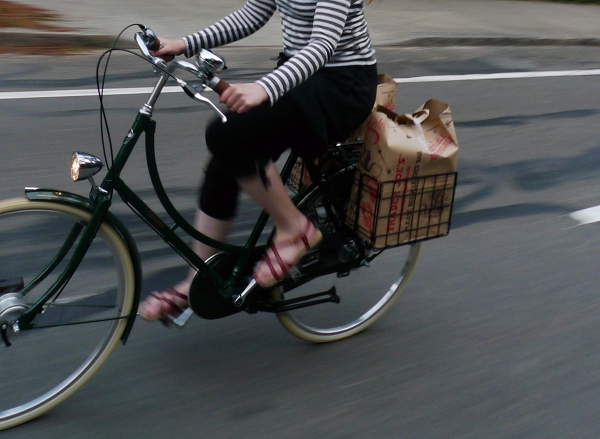 Given that small, specific things are easier to implement than grandiose plans, I think that creating a brochure such as the one I outlined to counteract the one promoted via Bike Month would in itself be useful to those who are considering cycling for transportation and do not know where to begin. But making one - as well as thinking up the means of distributing it - is a project that would require hours of my time and is beyond the scope of this blog. Putting forth ideas is far more difficult than merely criticising, and I am exhausted from writing this post. Your thoughts on all of this are, of course, welcome.
 In England, bars are portcullis, a fortified gateway usually made of stone. Nowadays they are a medieval attraction but in the past they served as the city’s defensive stronghold from invaders.
 High Petergate.

 Walking the stone walls.


 Above foto is the Treasurer's House I believe. Pretty!
 Inside the Monk Bar, King Richard III was fashion forward wearing the same black tights I am now wearing. The velvet fabric of the coat is also an all-time classic trend while those shoes, I see lots of teenagers wearing them now.
 Monk Bar and Goodramgate.
 It was only decided for certain that we will go last night, and now I have a day to get ready. While for many women, I imagine the most pressing question would be what clothing to pack, for me that is pretty much settled. Our photo equipment and props are also ready to go.But what is a girl to ride?Now, that is another matter!
 I could take Graham. Pros: He can handle the hilly, long distance rides we plan and has an excellent lighting system for those pitch-black country roads. Cons: A roadbike is not the best idea for in-town cycling (we are staying in Provincetown), plus I would be so nervous to leave him locked up at a bike rack!
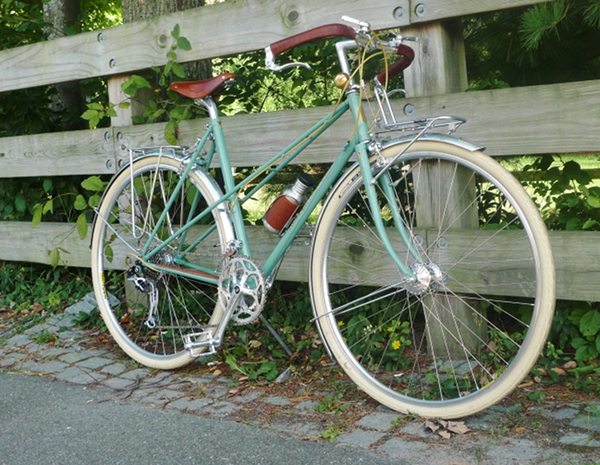 I could take the brand new (yet unnamed) mixte. Pros: I can ride her both in the town and in the country, and I know she is comfortable. Cons: We have not installed the lights yet, and are waiting for a part that may or may not arrive today. And I would be just as nervous to leave her locked up in town as the Rivendell.
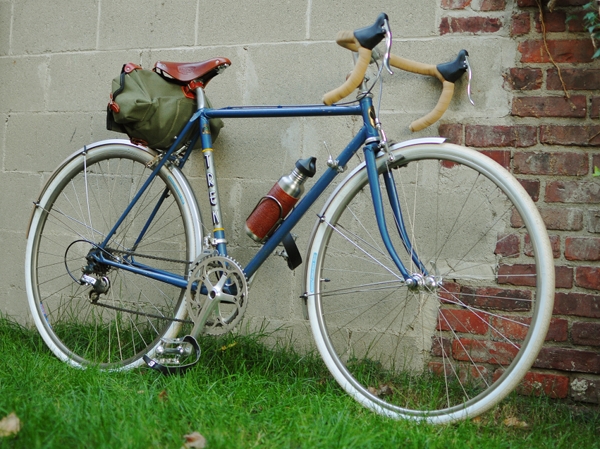 Or, I could take Seymour Blueskies. Pros: He would be fast on those hilly roads, and I would not worry about leaving him locked up on a bike rack in town. Cons: he does not have dynamo lighting, is not quite as comfortable as the other two options on super-long rides, and, as a roadbike would not be ideal for in-town cycling.
 How I missed it, I don't know. But, see those two photographs on the left – the ones of the soldiers standing in their camps? They are of companies of the 9th Regiment and the 44th Regiment of Indiana Volunteer Infantry! It struck me as odd that there would be on display photos of two regiments from Indiana to represent the northern troops... and that those two regiments are the same ones that Jacob Berlin and Ralph Goodrich served with! Jacob was in the 9th and Ralph in the 44th. What are the odds of that happening? Of course, they aren't the same companies that Jacob and Ralph served in, but still. Makes you wonder... I took close-up photos of the pictures and will have those in a couple of future posts.
 Some of the relics on display at Shiloh National Battlefield visitor center.Belt buckles, buttons, knives, bullets, and mini-balls.
 Both Jacob and Ralph were in the line of battle along “The Sunken Road” a portion of which was named “The Hornets' Nest” because bullets were flying by so close and fast that it sounded like a mass of hornets buzzing. This realistic diorama shows part of the action along the Sunken Road. A sign alongside it states “At one point in the battle, as the Confederates were trying to break the Union defense line at the Hornets' Nest, the Confederates concentrated the greatest collection of artillery yet to appear on the American continent. Artillery played a major role in the battle, supporting infantry advances, breaking enemy attacks, and causing many of the deaths and injuries.”
 The Monument to the 44th Regiment, Indiana Volunteer Infantry.
 Its backside faces the path and the “front” side of the monument faces the direction in which the troops were facing during the battle - south.
 The backside of the monument is inscribed with details of the battle:44th InfantryCommanded byCol. Hugh B. Reed.
  This was in the area of the Hornets' Nest. The monument to the 44th was to the east about a quarter of a mile down the path.

 The Holy Transfiguration of Our Lord Church sits atop a bluff overlooking Cook Inlet south of Soldotna in the tiny community of Ninilchik. We stopped there on the way to Homer because “The Milepost” (the travel guide we're using) stated that this church was a popular tourist site on the Kenai Peninsula with beautiful views of Cook Inlet.
 The church was picturesque as was the cemetery. The church has an active congregation and there were several recent burials in the cemetery.
 According to an entry in Wikipedia, the top bar of the double cross may represent the death of Jesus and the second one may symbolize his resurrection, but it could also be the cross beam on which Christ's wrists or palms were nailed. The bottom, slanted bar may represent a footrest where Jesus' feet were nailed to the cross. Another interesting interpretation has a much deeper meaning: The bottom bar may represent a balance of justice. Some sources suggest that, as one of the thieves being crucified with Jesus repented of his sin and accepted Jesus as the Messiah and was thus lifted into Heaven, the other thief rejected and mocked Jesus and therefore descended into Hell.
 And even though Mother Nature wasn't cooperating (clouds and rain all day long), the view from the bluff was still quite beautiful. A portion of the town of Ninilchik and Cook Inlet (at low tide) seen from the bluff.

 Toledo is located 70 kilometers south of Madrid (Spain). There is a direct train from Madrid Atocha train station to Toledo and the ride takes about half an hour non-stop. The city was declared UNESCO world heritage site in 1986.
 The crux of the Croz Spur, photos and content courtesy of Dave Searle
 Pinocchio, Mont Blanc du Tacul
 Sometimes you just wear gear out and it simply needs to be replaced


