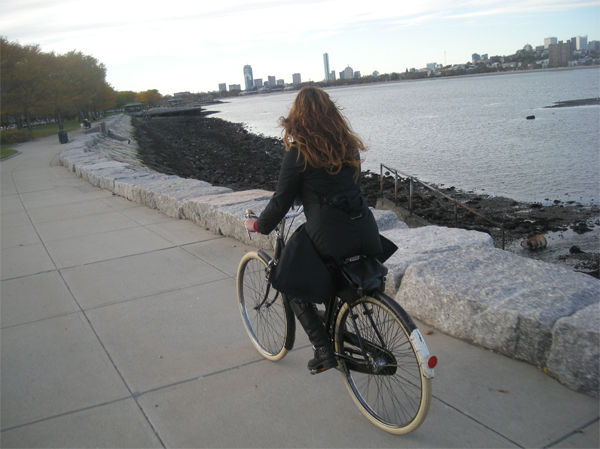
 This past Sunday marked my biggest vehicular cycling accomplishment to date: We rode from Cambridge/Somerville to South Boston and Dorchester - via a 9-mile route that took us straight across greater Boston. It's by no means the most cycling we have ever done, but it was certainly the most cycling we have done through a high-traffic urban environment. (We do not attempt to photograph ourselves while riding in traffic, so these photos were taken along the South Boston waterfront.)
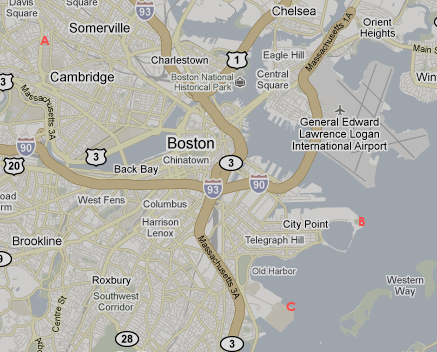 Referring to the map above, we went from point "A" to "B," then to "C" and to "B" again - and of course eventually, back home to "A".
 Our destination was Castle Island in South Boston, where the goal was to cycle along the Harbor path through Dorcester and back. The harbor path is quite nice and about 3 miles in length, but it is crowded with pedestrians in the summer. In early November, however, it is just perfect: Still enough people for it not to feel abandoned, but plenty of room to cycle.
 As you can tell by the photos, I was on my vintage 3-speed Raleigh DL-1 with rod brakes. No problems at all. The widely spaced 3-speed Sturmey Archer hub combined with lowered gearing (22 tooth cog) was more than sufficient for any elevation we encountered.
Oh, and I finally installed lights and a bell on this bike. The headlight is a CatEye Opticube LED mounted to the right fork blade, and the tail-lights (not visible here, but see the last two photos of this post) are Cateye Bike LD610s, attached vertically to the rear stays. The bell is a Crane brass bell.
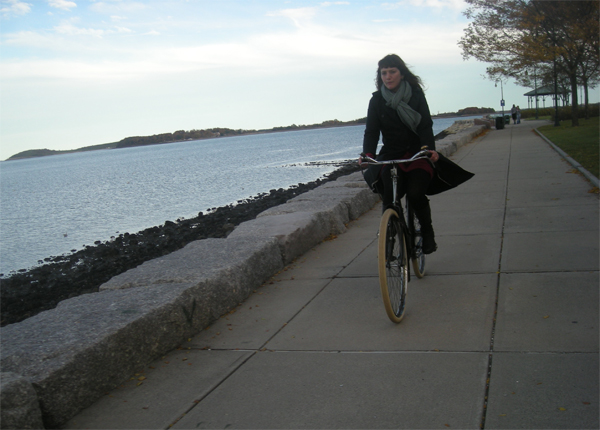 We began our ride on Sunday mid-day and there was considerable traffic, but not too bad. Interestingly, as soon as we crossed the bridge into South Boston, we got some friendly comments from local motorists. Not what I expected given the aggressive reputation of this area. I think people found our vintage bikes and dressy attire appealing - a nice thing to see on a Sunday?
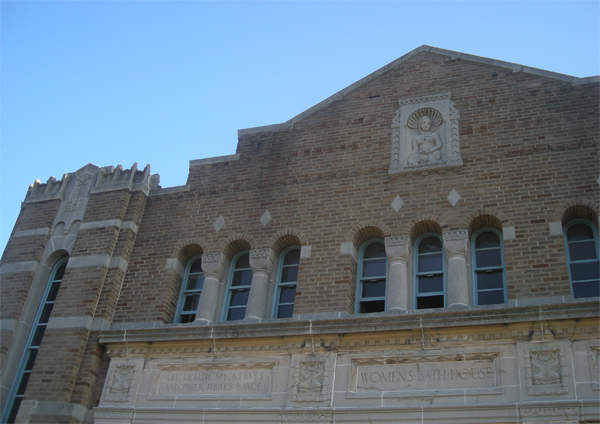 For those unfamiliar with the history and cultural climate of South Boston ("Southie"), it is an old working class neighborhood that has traditionally been predominantly Irish. And I don't mean just Americans with Irish heritage, but a considerable number of recent immigrants: you can hear Dublin and Cork accents spoken. Over the past decade, the area has grown more ethnically diverse, and some parts of it have also become "gentrified". But overall, the feeling of its historical roots still remains. The image above is the old Women's Bath House (now part of a community swimming facilities) that is located along the harbor path right before Castle Island.
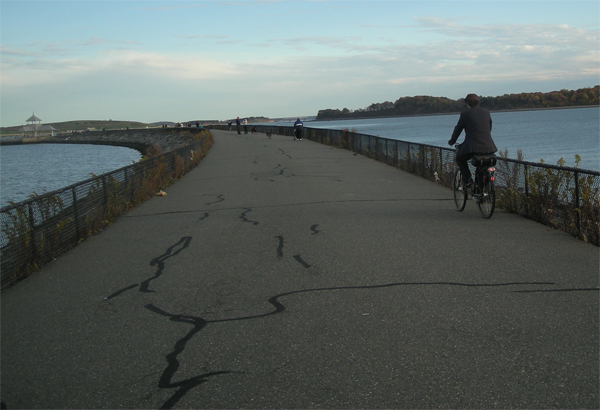 Castle Island itself (which, as far as I can tell, is really a peninsula) curls around and connects to another part of the mainland via a narrow strip of land (see point "B" on the map above). This strip does not naturally close all the way, but they built a bridge to complete the loop. The Pleasure Bay Loop is part of the cycle path and offers nice views of the Boston mainland, the harbor, and the mysterious industrial landscape of the Conley Terminal of the Port of Boston.
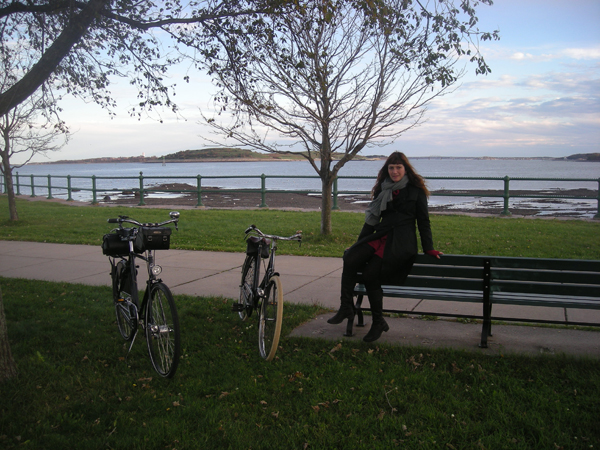 Arrival at Castle Island via the Pleasure Bay loop. Here we were approached by an elderly man who asked us about our bikes and told us that he rode a DL-1 in Ireland since the 1930s - because the roads where he lived were bad and it was the only bike that could handle them. More evidence that the DL1 makes a great "off-Roadster". The gentleman also told us that his other bike at the time was a "fixed wheel bicycle" - hard core!
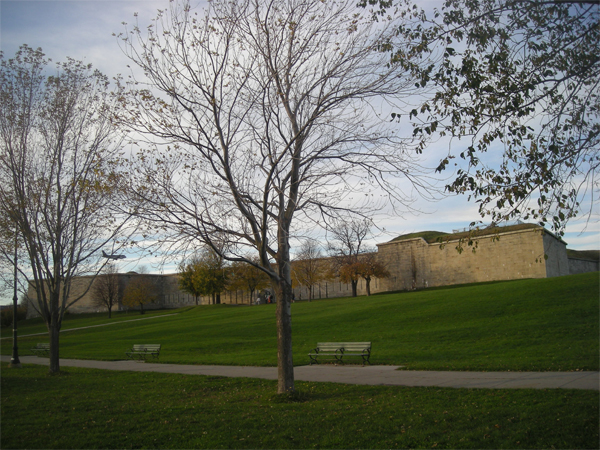 Finally, here is the real attraction of Castle Island: Fort Independence - originally built in 1634 for the sea defense of Boston. The fort is located upon a hill, and visitors climb it to sit and watch the airplanes land at Boston's Logan Airport just across the water. On the photo above I managed to capture one of the planes landing - though they look much larger and more impressive in person! The cool thing about planes landing, is that there is always a group of them, waiting for their turn to land in a cluster of lights in the sky. Then suddenly one light separates form the cluster and begins to move toward you until it grows larger and more plane-like. It really is pretty neat to watch, and Boston's Logan Airport is special in that it's surrounded by water.
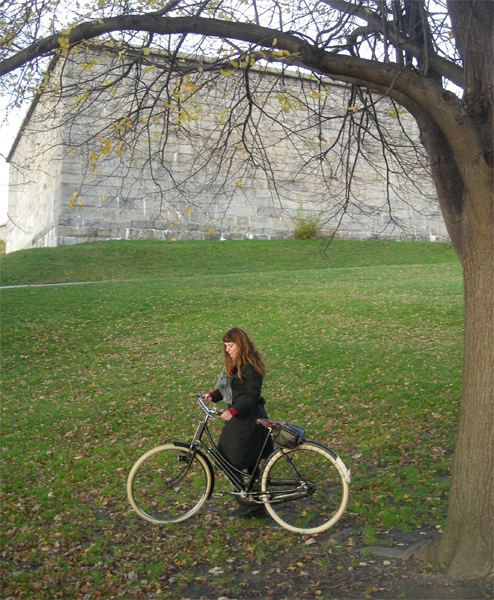 Walking my bike up the hill; a corner of Fort Independence in the background. Didn't want to cycle on the nice grass.
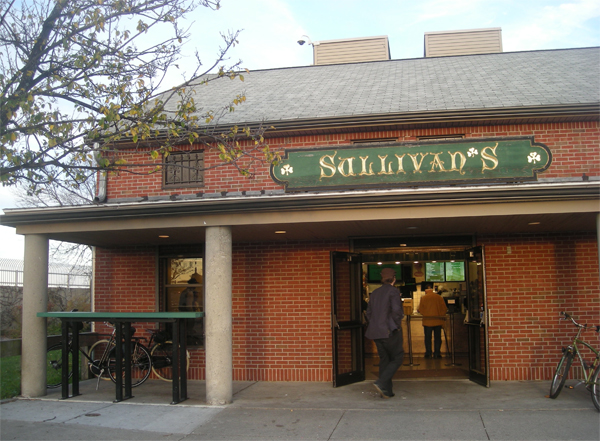 Next to Fort Independence is the legendary Sullivan's. This is a fast food place that serves everything from delicious cheeseburgers to lobster bisque (there are healthier alternatives as well, but somehow they don't seem appropriate). As you can see, Sullivan's even had VIP parking for our bicycles. The thing to do is to order from Sullivan's, then take the food to the top of the hill and dine while watching the planes land at sunset.
 The sunsets on Castle Island are beautiful, but difficult to capture.
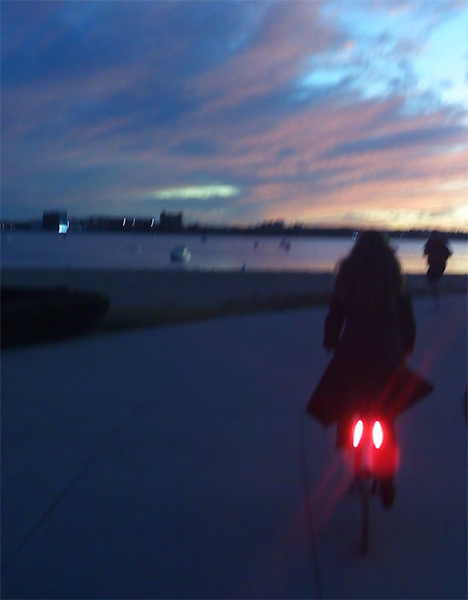 We enjoyed cycling along the South Boston waterfront, as well as the process of getting there and back. Returning home at night was particularly nice: the beautiful lights over the water, the melodic noise of traffic, the peaceful darkness. It feels good to be comfortable cycling through the city you live in.
If you are in the Boston area and want to try cycling to Castle Island, the best way to get there from the center is on Summer Street, straight to the end. Summer Street may seem intimidating, but it is surprisingly okay. If you don't feel confident the first time, go on a Sunday morning: Everyone will be either asleep, in church, or nursing a hangover. The streets will be yours!


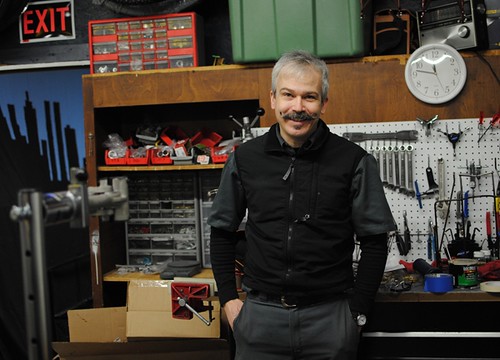



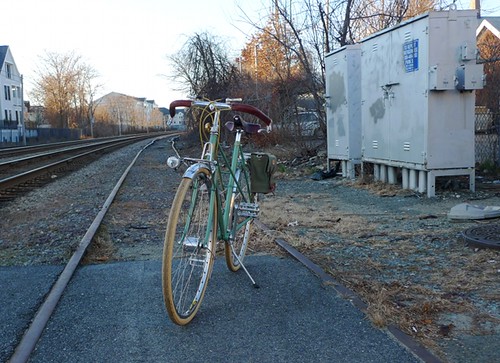
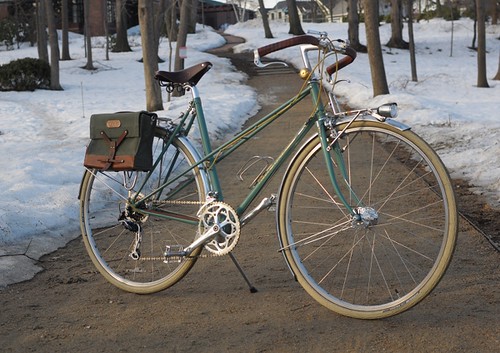
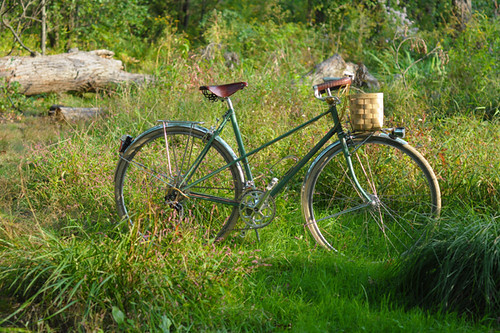 It's been about 13 months since I started riding my Royal H. mixte, so I thought it about time for a one year retrospective review. Together with my initial review and the earlier posts on the topic, this completes the story of my first experience with ordering a custom frame.
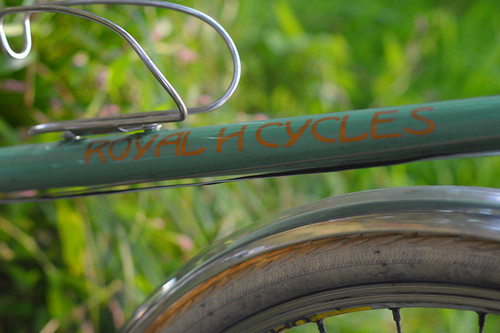 To summarise without repeating myself too much: This lugged steel mixte was built for me by Bryan Hollingsworth of Royal H. Cycles in -. I described how I wanted the bicycle to look and feel, and he came up with the geometry and chose the lugwork and tubing. When the frame was done, the Co-Habitant and I built it up with components that we selected. For my initial review of the bicycle, please see here. A year later, my overall impression of it has remained largely unchanged. While in some respects I've become more critical of the bike after a year of use, I've also come to appreciate aspects of it that I had not even noticed initially. I will try to provide details on both counts.
 Use History
 I rode the bike throughout Autumn , then hung it up toward the end of December and mostly rode my IGH (internally geared hub) bikes over the winter months.
 In April the mixte was retrieved again, and has been in regular use since. It is my go-to bike for transportation-oriented trips of over 10 miles, and increasingly I found myself using it for shorter trips around town as well. I never had a computer on this bike, so I cannot tell you how many miles are actually on it.
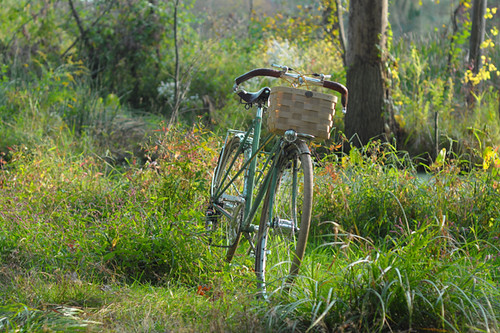
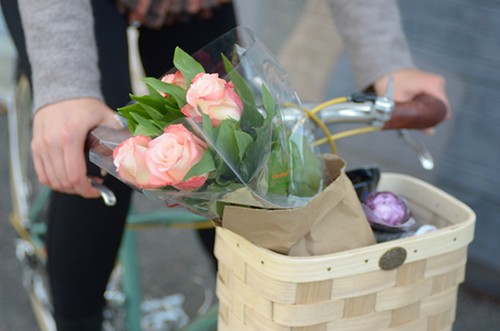 Typically I will ride the mixte with a pannier, and recently I have also attached a small front basket in which I will carry additional items. The mixte handles fine with a light load in the front (i.e. whatever will fit in the basket) and a medium load in the rear.
 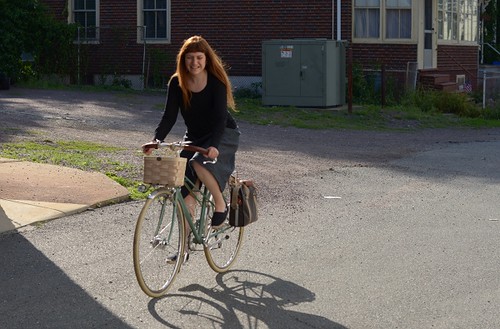 Ride Quality
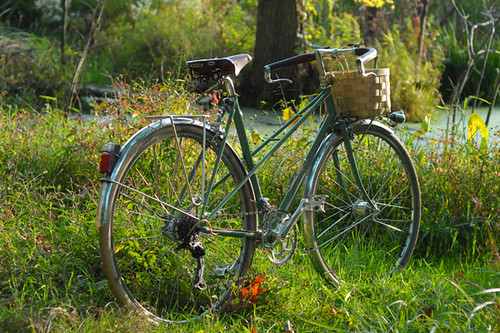 Likes and Dislikes
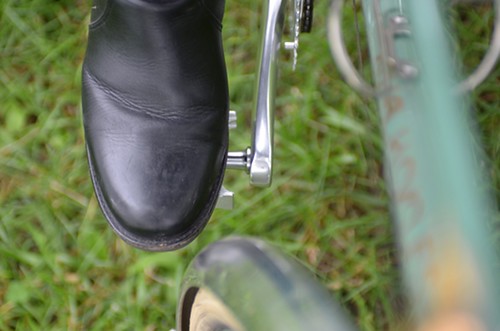 As far as dislikes, I really have only one: toe overlap, which this bike has a bit of. I don't think I mentioned it in my initial review, because I didn't notice it until I began using the bike frequently for transportation. I go through stages where I think that maybe it's okay or not even there, but then occasionally I experience it and it bothers me. We switched the cranks from 170mm to 165mm and that helped, but not entirely. We talked of the possibilities of a 650B conversion or a fork re-rake, but upon more careful examination that won't work. To eradicate the toe overlap entirely, I would need a new fork - which would then need to be painted to match the frame and the whole thing would be a hassle. Not sure what to do yet; maybe a winter project.
 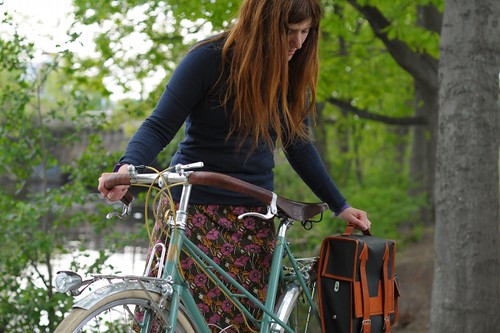 There are other things that at some point I questioned, but have since decided are good. For example, while my initial impression was that the chainstays were too short (to carry standard sized panniers without heel strike), I have since found a number of panniers that work (see: Philosophy, Po Campo, Cristobal), so this no longer bothers me. The short chainstays contribute to the bike's compactness and spirited handling, so as long as they allow me to carry stuff I am happy.
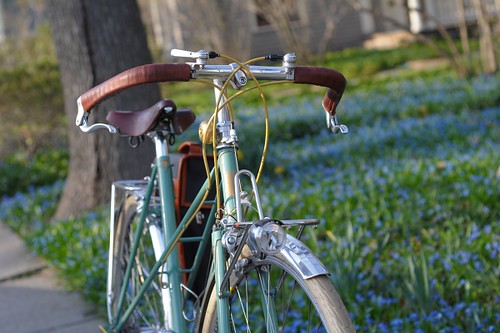
  Another thing - and this has nothing to do with the frame - is that I am rethinking the handlebar setup, just because I feel like a change. Not sure what I'll do yet, but in Spring you might see something different in place of the Porteur bars and inverse levers.
 If I were doing this all over...


.jpg)