
(Photo: Making the first crux move just off the deck on Absurdland (5.8).)
The day after Thanksgiving is often a great day in the Gunks. The weather is frequently cooperative, and the cliffs are always pretty empty.
This year we had a great time, climbing in shirtsleeves and light jackets, although it was a bit chilly when we first set out. Gail and I climbed in a party of three with Julia, a friend of Gail's with whom I hadn't climbed before. During the drive up, I found out that Julia is a lot like me, working through all the classic 5.9's in the Gunks and setting her sights on the 5.10's.
I knew this might well be my last day of climbing in , so I hoped to get on at least one 5.10.
But first we had to find a good warm-up climb. I suggested Absurdland (5.8), a great single-pitch route I hadn't been on in . I had taken a brief hang at the second crux way back in when I led the climb onsight, and didn't go back until , when I easilyfollowed Maryana up it. I really enjoyed it last year and wanted to go back to send it on lead, which I was confident was well within my abilities nowadays.
The climb reminds me of the first pitch of Son of Easy O (5.8). In both climbs the first 20 feet contain steep, somewhat thin moves up a crack, and then both climbs ease off to beautiful, lower-angled face climbing. On Absurdland the two crux moves come pretty fast off the ground. Both moves are well-protected and maybe a little stiff for 5.8. (The climb has at times been rated an easy 5.9.)
I had no trouble with the cruxes this time around, though I could see why I took that hang back in . The second crux is pumpy and if you aren't confident enough to move right away it is difficult to arrange a rest stance there. There is good pro right at your chin so my advice is that you just go for it! After that move it's all gravy.

(Photo: Julia starting up Gory Thumb (5.9).)
Absurdland ended up setting the agenda for the rest of the day. Everything else we did was nearby.
Julia picked Gory Thumb (5.9) for her first lead. I was glad she selected it because I'd never done it before. I had looked at it and rejected it because it seemed like a squeezed-in route (next to Raunchy and Wild Horses) without too much too offer. I thought the crux thin crack on the white face about 40 feet up would be over in one move, and that the rest of the climb would be a waste of time. Also I was concerned about the pro down low.
But Julia found a really good nut right after the start. (I struggled to remove it.) And I ended up enjoying the pitch. The initial moves are much easier than 5.9 but they are interesting. Up above, the crux is good and well-protected with small wires. You can finish as Julia did by continuing straight up above the crack to an easy fault, or you can contrive to prolong the real climbing by stepping left and making a couple of slab moves up to the ledge, which is what I did (at Gail's suggestion) as the second. Nice pitch. Maybe a touch easy for 5.9? Swain has it as 5.8+.

(Photo: Thin moves right from the jump on Never Never Land (5.10a).)
After Gory Thumb it was my turn to lead again and I knew exactly what I wanted to do. My objective was so close, drawing me like a magnet.
Balrog! Balrog! Balrog!
This climb has been on my list all year, which might seem strange because no one thinks it is an "easy" 5.10. At 5.10b many call it a sandbag. The crux is very unusual, featuring a hanging, sloping corner. You have to find a way to reach up to the holds high in the corner (which plays out like a roof problem), and then find some way to get yourself onto the odd, sloping left wall of the corner. But even though this crux is challenging, it is short, and there is an awesome horizontal crack-- it resembles a mail slot-- for pro right at the crux roof. It is a clean fall into the air if you fail. I figured that even if the crux was too hard for me to onsight I should be able to protect it well.
Why not go for it?
I dispensed with the easy early climbing quickly, placing very little gear. Then I found myself at a slab beneath the looming roof. In this slab was a perfect thin vertical seam. Up close, the crux roof looked much scarier than it did from the trail. There was a great-looking undercling hold in the roof and from there I figured I could reach the mail slot on the left side of the hanging corner and throw in a piece. But if I was wrong and fell reaching for the slot I might tumble awkwardly down the slab. I hesitated quite a bit, placing a nut in the seam, then thinking about the move, and then repeating the whole process.
I ended up placing four (!) nuts in the slab before I finally went for it.
I needn't have worried so much about reaching the mail slot. That part turned out to be no problem.
But I struggled with the crux reach afterward, taking a few hangs before I figured the whole thing out. I had great gear. Ultimately I had two cams in the mail slot, a purple Camalot that was solid if a little shallow and a bombproof red Totem Basic (Alien clone). If you place two cams as I did, make sure to leave some room for your hand and a later toe!

(Photo: Julia on Never Never Land (5.10a), before the crux.)
I was disappointed that I didn't onsight Balrog, but I'm pretty sure I can redpoint it in , so long as I nail the reach after the mail slot to the great hold up in the corner. There is no magic to this reach, you just need the confidence that comes from knowing how bomber the hold is. The subsequent move to the left wall is strenuous, but I think I have it all worked out. I will not spell it all out but I will tell you the secret to my beta:
Sometimes, grasshopper, it is better to push than to pull.
I'm not sure but I suspect I might be doing Balrog the hard way.Dick Williams says in his guidebook that the climb is especially rewarding if you can figure out the easier way to do it. After I got back down, Julia struggled with Balrog much as I did, and then Gail schooled the both of us by sailing up it like it was nothing. I was belaying and couldn't quite tell what she did, but it looked very different from my solution. If you are searching for the especially rewarding easy way to do it I'd suggest you reach out to Gail. She knows.
Note: If you are heading up Balrog in the near future, bring some new webbing. The two pieces of webbing that were tied to the belay tree there in late November were both feeling pretty brittle. We went ahead and used the station but in retrospect I wish we'd replaced the webbing.

(Photo: More of Never Never Land (5.10a), juuust beneath the crux.)
Julia was pissed off about Balrog, and she was on a mission for redemption. She decided to get it by leading Never Never Land (5.10a).
This was her first 5.10 lead and I was honored to witness it. Although Never Never Land has an easier rating than Balrog, I think Never Never Land is a much headier lead, with spaced pro and far more sustained climbing.
Gail and Maryana have been pushing me to lead Never Never Land, but I have resisted, both because this kind of thin face climbing isn't my favorite thing and also because in the summer of I toproped it with Gail and (to my enduring shame) I couldn't do the crux move AT ALL. It was a very hot, slimy day, and at the time, in those conditions, I couldn't imagine doing the move cleanly. The crux crimpers were so greasy, the footholdsnonexistent.On that day I fell several times and then gave up, French-freeing the move by pulling on the draw at the bolt.
This time around I was excited to follow Julia up Never Never Land so I could check it out in better conditions without having to lead the climb. I'm afraid that watching her did not make me want to jump on the sharp end. There is a repeated pattern of hard moves above gear that lead to the stances where one can get pro. A fall at any one of these difficult moves would not be horrible, but would send you for a ride. There are one or two such moves before the crux. Then the crux move just after the bolt is well-protected, but you have to run it out to the piton at the next horizontal, which is quite a ways away. Right before the piton is another hard move. After the piton it eases off a touch and the final moves have better pro but it isn't easy by any stretch. The thin face moves continue all the way to the chain anchors.

(Photo: Julia just past the crux of Never Never Land (5.10a). Big crimpin'! Way to go!)
Julia did a great job, handling the whole thing with a calm intensity. There were some tense moments, but she made it to the top without a fall, elated. When it was my turn, I was pleased to send it on toprope. Still I worry about leading it, as there are at least three places where I can see myself falling off if things don't go just right. Whether on lead or on toprope, I should really do more of this type of thin face climbing. All the way up I kept telling myself (and others!) that I hated the climb, but by the time I reached the chains I had to admit I loved it just a little.
We ended our day with a warm-down. I led Cakewalk (5.7), another nearby classic that usually sees action only on its first pitch, which ends at a bolted chain anchor. On my last and only previous trip up Cakewalk I'd gotten lost and wandered into some much more difficult and poorly-protected climbing, from which I'd thankfully emerged unscathed. This time I made sure to go left immediately after the tree and it was nothing but joy. Some nice face climbing wanders up to the obvious, huge right-facing corner. Dick describes the first part of the pitch as a little run out but I found plenty of pro. Then the burly moves up the corner were great fun. Before I knew it I'd reached the chains. The climb, like , was over much too soon.


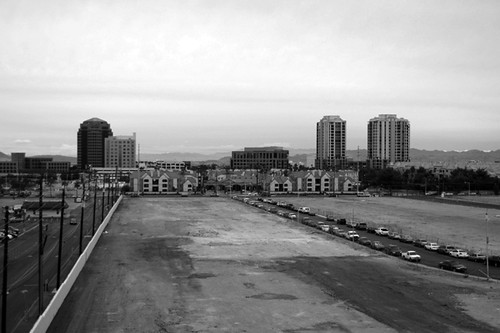 Though I've lived in many different places over the course of my life, they have been mostly in Europe. Within the US my travels have been limited to the East Coast, and my trip to Las Vegas for Interbike was the first time I'd ventured west of Pennsylvania. Popular culture is saturated with images of Vegas, and I thought I knew pretty well what to expect: casinos, bright lights, neon signs, drunken merrymaking... If in the right kind of mood, I could see the kitsch appeal. But what I did not expect were unfinished construction projects, miles of empty parking lots, and a funny sense of being in the middle of a Broadway production that had its funding cancelled before the set could be completed. Maybe I wasn't supposed to arrive during the daytime (or be awake during daylight at all while there?), but the Vegas I saw looked not unlike the outer boroughs of former Soviet bloc cities, with their faded concrete high-rises and muddy vacant lots.
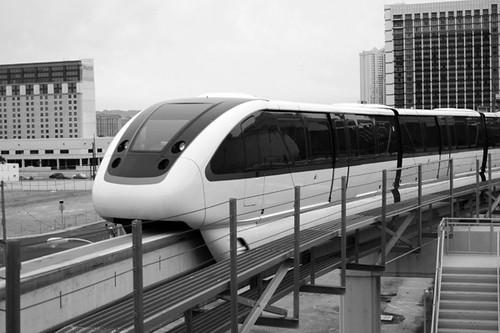 Equally fascinating was that Las Vegas seemed to be intentionally "anti-pedestrian" in design. I have no background in city planning, so it's hard to explain exactly what I mean. But with the exception of the smallish main strip - which is indeed walkable and feels like Disneyworld on crack - the city is made of these self-contained complexes accessible either by car or Monorail (they really try to push the Monorail, but it was mostly empty every time I used it).
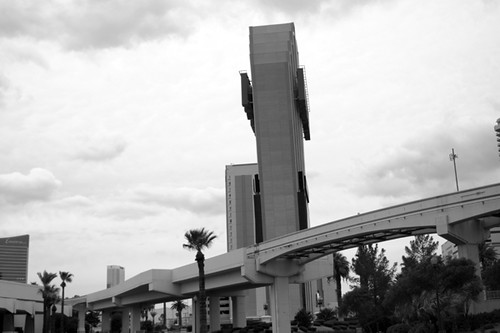 Even in the city center, the roads are multi-lane and highway-like. Sometimes there are sidewalks, but they are lined with tall guard rails and there are no provisions for crossing the street except maybe every mile or so.The hotel I stayed at was technically around the corner from the convention center where Interbike was held, yet it was recommended I take the Monorail to it. Well, one night I had this crazy idea to walk. I could clearly see the hotel right in front of me - how bad could it be? It took about an hour and a half, because there was no way to walk to it in anything resembling a straight line. I had to walk around stadium-sized empty lots surrounded with chainlink fences, and when I tried to take shortcuts through hotels, I was forced to navigate along winding paths designed to maximise my exposure to slot machines. It was surreal. As for riding a bike, I remember someone posting a ridiculous statistic on twitter, claiming that 100% of Las Vegas residents who cycle report being hit by a car at least once. Having now been there, I no longer find it implausible.
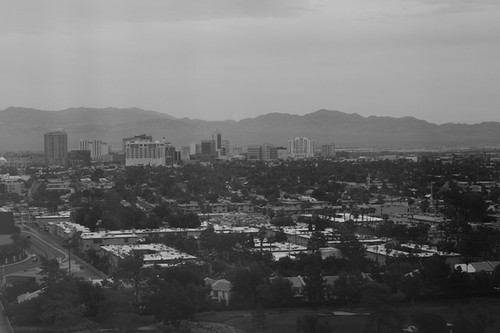 While of course I've known that places like Las Vegas exist, I guess I've done my best to avoid them - choosing to live in areas that are walkable, which for me equates with livable. Being faced with the reality of what a city like this is actually like was jarring. I know that places like Boston comprise only a small fraction of the American urban landscape, while a model similar to Las Vegas is more common. I know it, but I try not to think about it, because the realisation fills me with a dread that I don't know how to overcome.


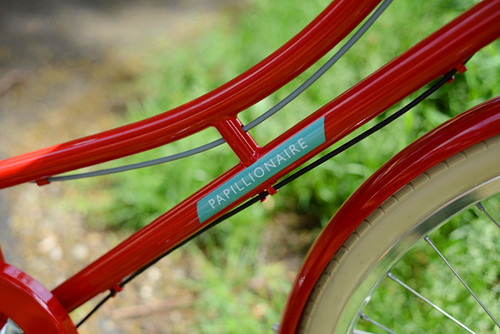
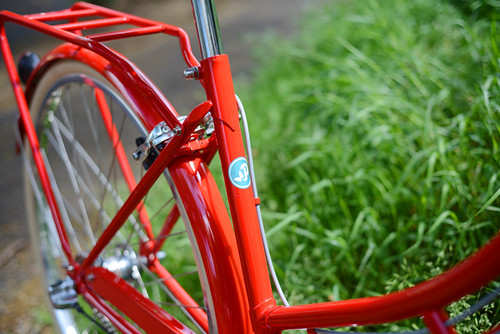
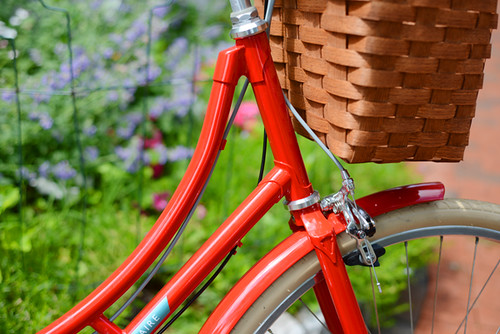
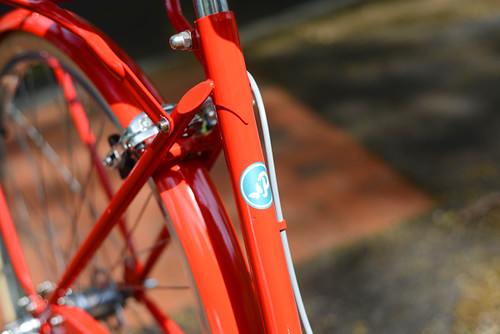
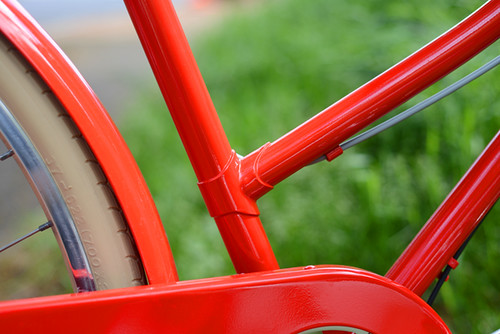
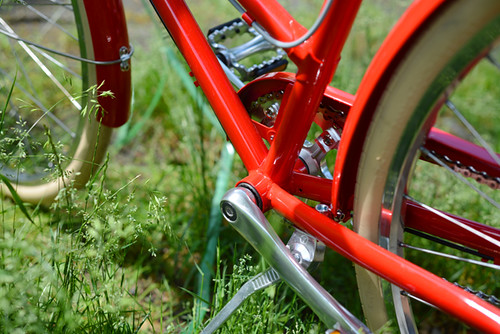
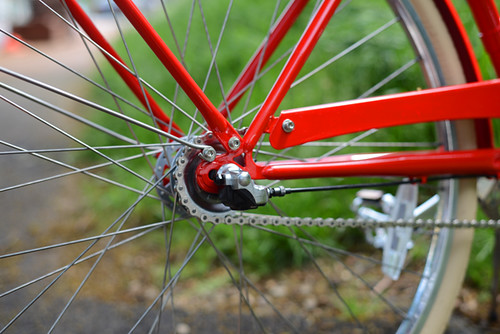
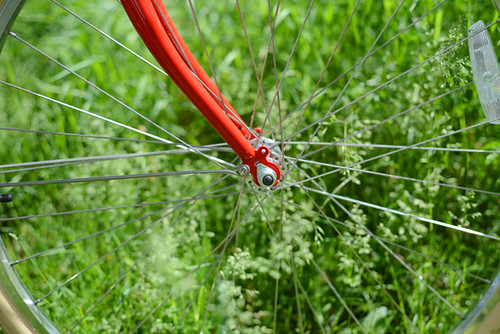

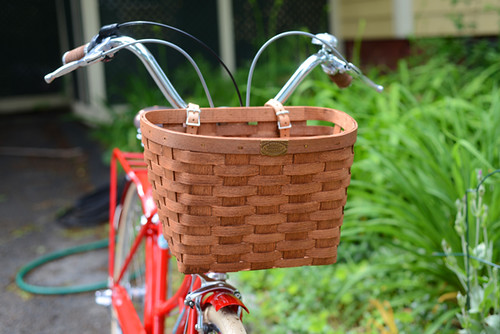
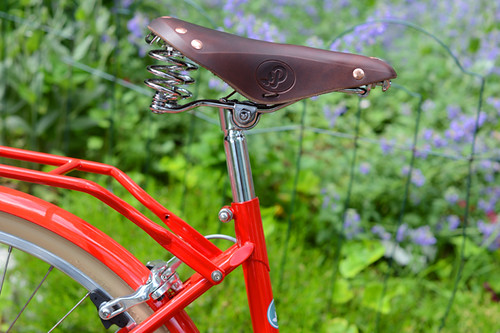
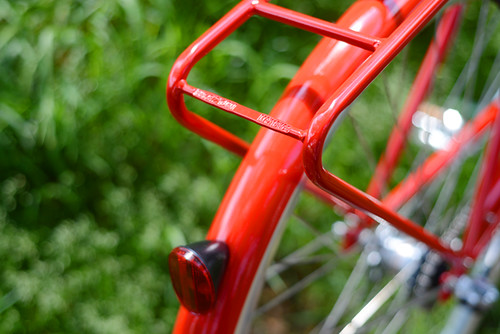
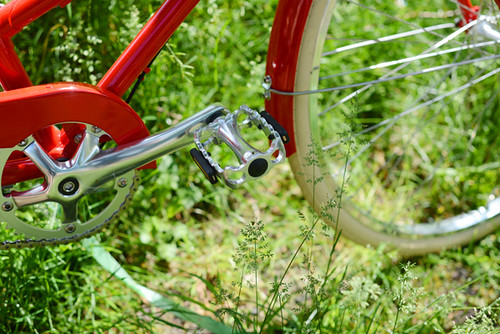
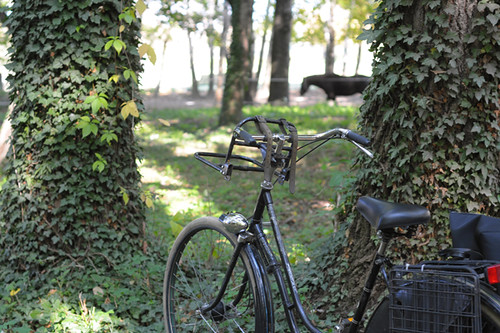 When people learn of my travels to Vienna, they typically want to hear about all the things they associate it with: the gilded neoclassical buildings, the opera, the horsedrawn carriages, Wienershnitzel, Sachertorte, and Mozart. But while all of that is indeed here, it is very marginal to my experience of the place. The centralmost 1st district - with its maze of white stone, processions of tourists, ticket peddlers dressed as historical figures, and endless shops selling fur coats and stockings to overcoiffed ladies - is a place I keep away from inasmuch as possible. The absurdly grandiose architecture of the famous Ringstrasse is something I look upon with fond irony, but it does not define the city for me. My experience here has always been that of an on-and-off resident, rather than that of a tourist, and "my" Vienna consists of real neighbourhoods, out of the way cafes, small parks frequented by locals, and other places you are unlikely to find in tourist guides. For me, these places are what makes Vienna special, what creates the captivating atmosphere that so draws me here. And yesterday I spent the day wandering through one of them, on my bike.
 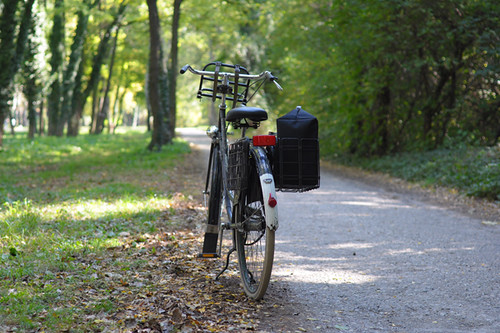 While many are no doubt familiar with the Prater - a large park that runs through the Southern part of Vienna and includes an amusement park, a stadium, various athletic facilities and horse trails running through wooded alleys - few venture beyond it into the tiny neighbourhood of Freudenau on the outskirts of town. On the map it does not look like much, and descriptions of it are not particularly inspiring: there is a golf course and a horseracing track, but otherwise it seems unremarkable. But the maps and guidebooks say nothing of the gravel trail that will take you through what can only be described as an enchanted forest, past a cluster of mysteriously abandoned mansions, ancient stables and ethereal-looking horses.
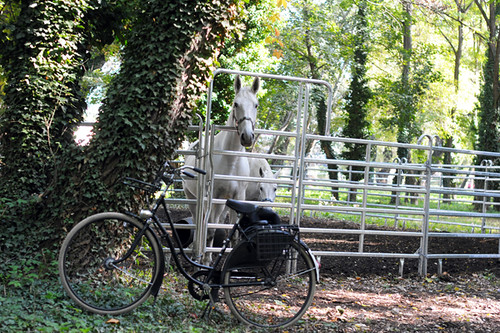 The horses are unexpected, because they really are in the middle of the woods, and not always contained within enclosures. They can be found wandering around untethered between the moss and ivy-covered tress, grazing serenely. I suppose so few people happen through this area, that no one bothers them.
 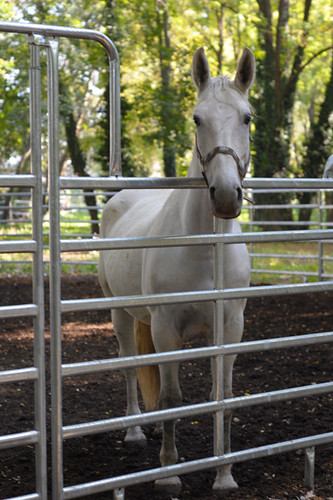 The horses are not only beautiful, but tame and very sociable. You can pet them and feed carrots to them, which I sometimes find lying around.
 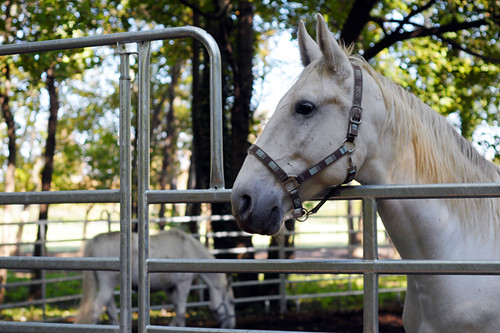 I've been trying to understand what the horses are doing there and who they belong to, but there is never any human around to ask. I could be wrong, but I do not think that these particular animals are racehorses; the racehorses I've seen are not kept like this and don't behave like this either. A friend suggested that these are therapy horses for handicapped and emotionally disturbed children. Apparently Vienna has an equestrian therapy program, and this could be where the service animals are kept.
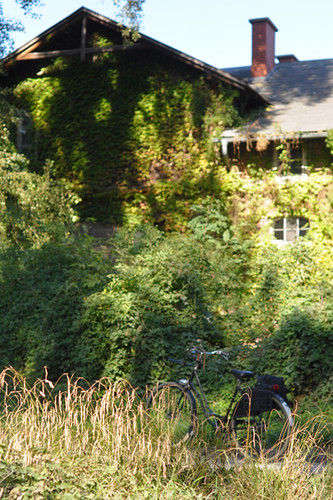 Riding on the gravel trail through Freudenau is a soothingly surreal experience. There is such a haunting sense of history, and I am nearly always the only person there. I can hear nothing but the sounds of overhanging tree branches creaking, ravens' wings flapping, horses hooves clip-clopping over dried leaves, and my own bicycle tires rolling over gravel.
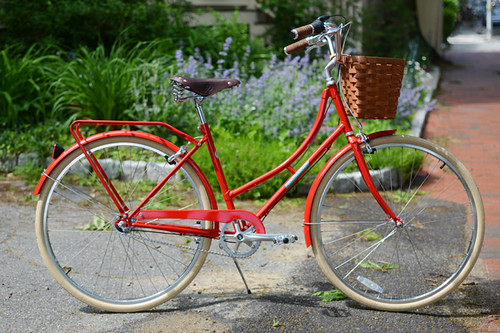
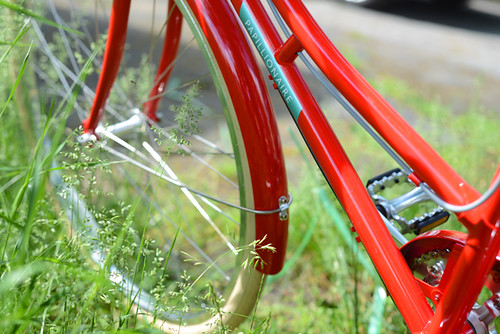
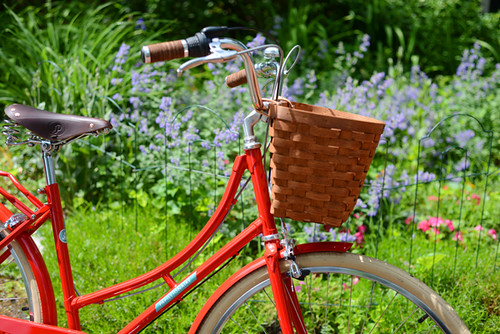
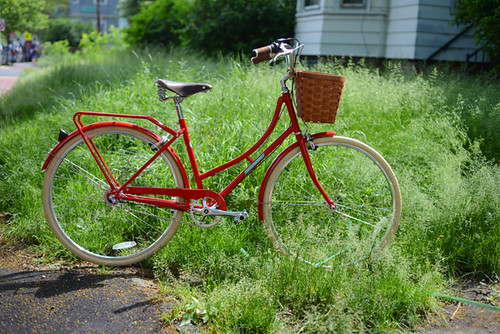
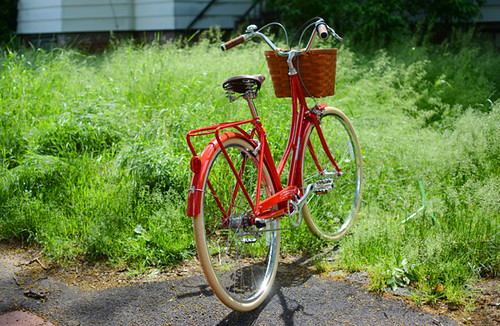
 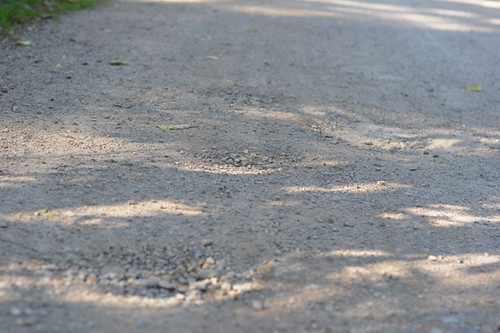 Perhaps the uneven gravel, with its occasional ditches and root protrusions, explains why not many feel compelled to venture here. But Jacqueline handles it without a problem.
 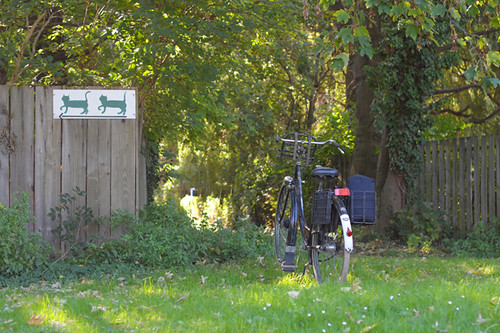 On the way back to civilisation, I am delighted to pass one of my favourite signs in Vienna. It's charming, because it suggests that the sign is for the cats themselves, rather than humans. "This way if you're a cat."
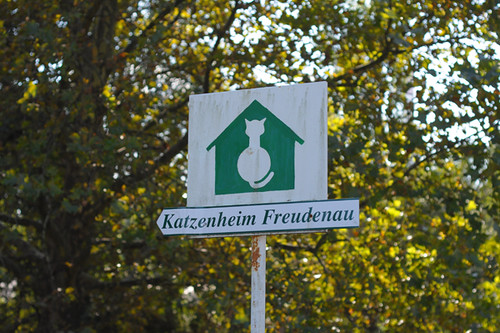 Of course it's only a sign for a cat shelter.But Katzenheimhas a more romantic ring to it, and I choose to imagine it as a genteel home for wayward felines - no doubt with miniature Jugendstil furniture and catfood served in little crystal dishes.
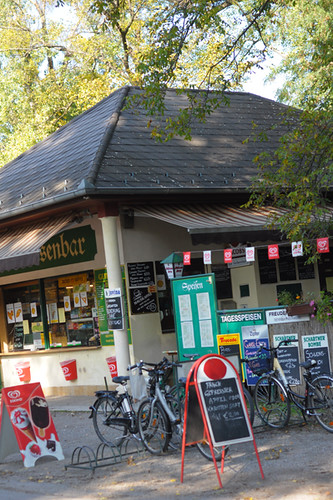 Right before Freudenau connects back to the Prater, there is a small cafe where I like to go. With traditional outdoor cafes like these in Vienna you never know what to expect. Some will serve awful microwaved food and packaged supermarket sweets that they simply open and dump onto a plate. Others will serve homemade dishes prepared with local ingredients that are as delicious as anything you could order in the best Viennese restaurants. This one leans toward the latter and I am never disappointed with even the simplest food I order there.
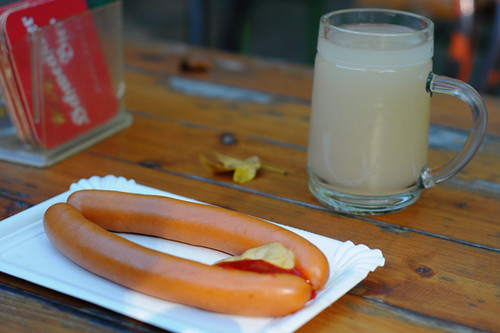 I don't usually feel compelled to photograph food, but readers have been asking about this more than anything else! So here is a ridiculously stereotypical meal, photographed just for you: frankfurters and sturm.
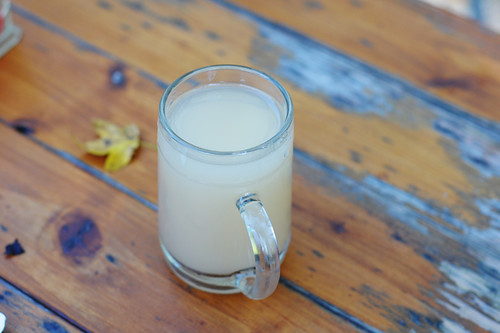 Sturm is a sort of fermented young wine, made from the first grape harvest of the season.It is naturally fizzy and low in alcohol, and tastes somewhat like a grapey version of hard cider. There are loads of vinyards outside of Vienna that compete to make the best Sturm in celebration of Autumn, and it's typical to sample them from as many places as possible this time of the year.
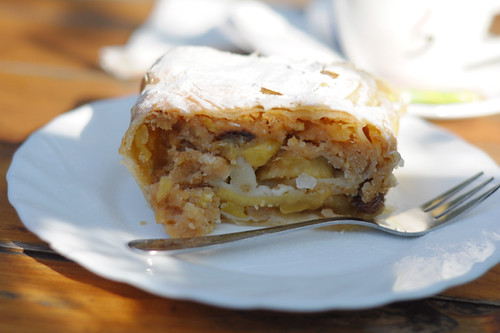 And a Viennese Apfelstrudel: heavy on the apples (local and fresh, not canned or jellied!), tart and not sweet, and very light on the crust - which is thin like filo dough, only soft instead of crunchy. There are also raisins mixed in there with the apples, which I could personally do without - but the rest I love. It's hard to eat Apfelstrudel elsewhere after getting used to the version they make here.
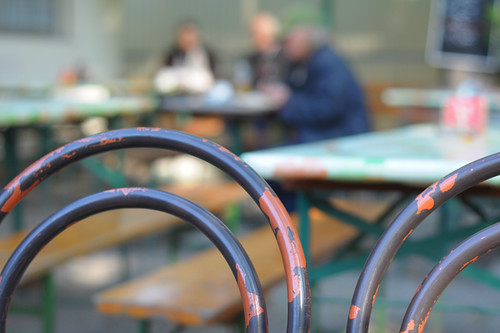 It's difficult to explain my attachment to Vienna without discussing my personal background at length. But I hope these pictures help express what words fail to.
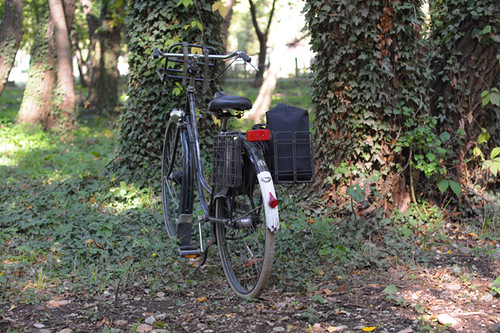 Vienna is a large, sprawling city and some of my favourite places are difficult to access without a bicycle. Cycling is truly the best way to travel off the beaten path and to visit all the places I love - on the road and off.
