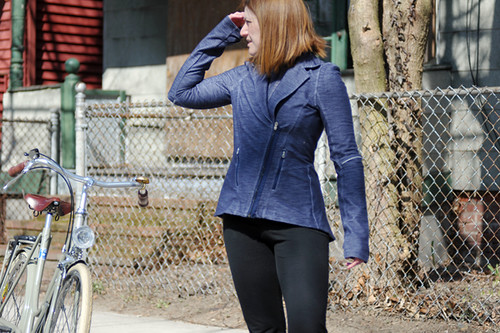
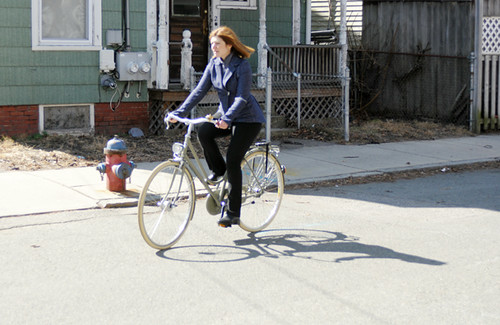
 A couple of weeks ago I received aBella Ciaobicycle as part of a work-related trade. I have never been compensated for anything in bicycle before, but I think I could get used to this if absolutely forced to (at least for the benefit of providing test ride reports for my readers, right?). The bike was assembled with my preferences in mind, and I was invited to offer an honest critique.
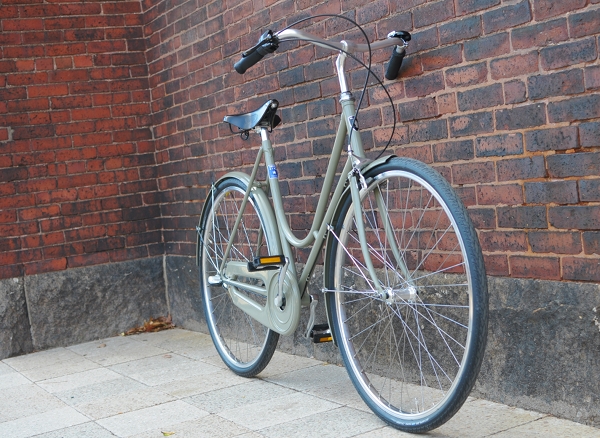 The bicycle is aBella Ciao"Corvo Citta Donna". The model name translates into something like "urban raven" anddonnaindicates that it is the lady's version. The colour (chosen by me) is "verde arsenale" - a pastel army green. Half a dozen other colours are available as well. The "Corvo Citta" models can be ordered as single speeds, 3-speeds, or 7/8-speeds, with or without coaster brake. I asked for a 3-speed coasterbrake version. The accessories are either honey or black, depending on the frame colour, and mine came with the black accessories package.
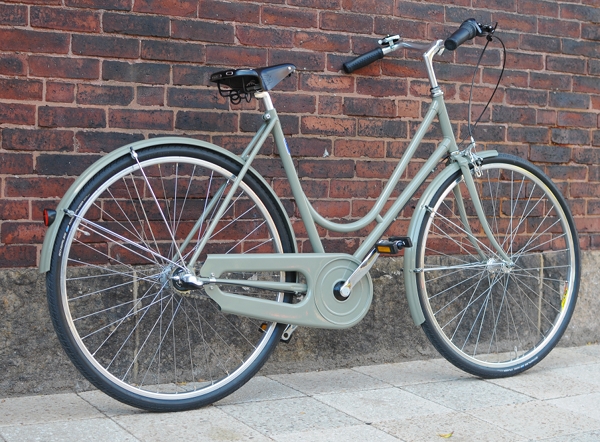 Bella Ciao frames are individually hand-made (brazed and lugged) by a small family-owned manufacturer in Northern Italy that has been building frames for generations. The standard models are cro-moly steel, though there are also limited editions made of Columbus tubing.Standard features on the Corvo Citta Donna include the classic Italian frame construction, 700C wheels with alloy rims, body-coloured fenders, an enclosed chaincase with a rear opening, leather saddle and grips,rear reflector,and a brass bell.
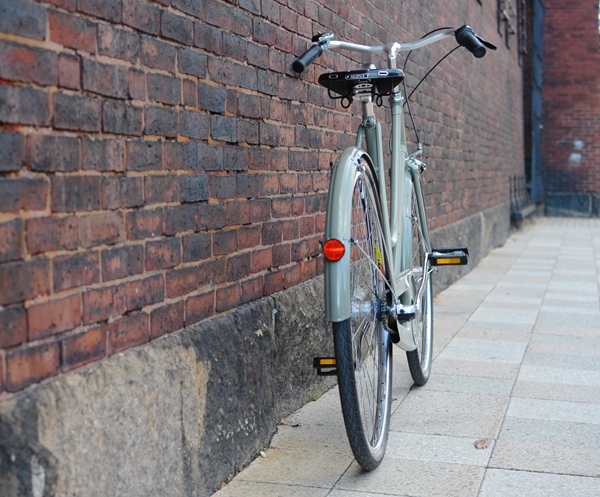 The frame is made in size 54cm (21.5") only, measured the "standard" way. This is an important point, especially if you are trying to compare the Bella Ciao to the Abici,whose sizing is measured differently. I would say that the Bella Ciao frame isslightly larger than the bigger of the two Abici frames.
 With its hardy tubing, modest lugwork, and thick powdercoating, the "Corvo Citta" is attractive, but decidedly utilitarian.
 It is not a delicate bicycle by any means; the frame feels as if it can take anything that life has to offfer.
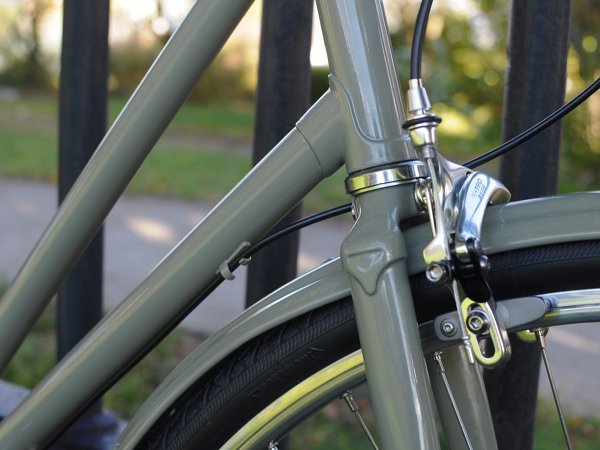 The lugged fork crown warms my heart; very nicely done. And look at the body-coloured cable guide braze-ons.
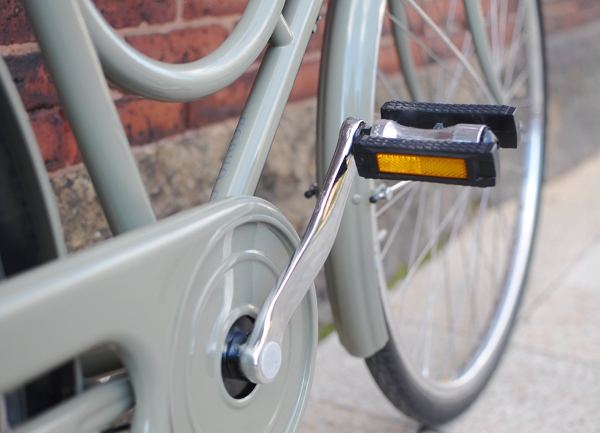 The only part of the frame that is not lugged, is the connector between the curved top tube and downtube. But if I have to choose between this and the fork crown, the latter is infinitely more important to me. (The connector on my Pashley was not lugged either.)
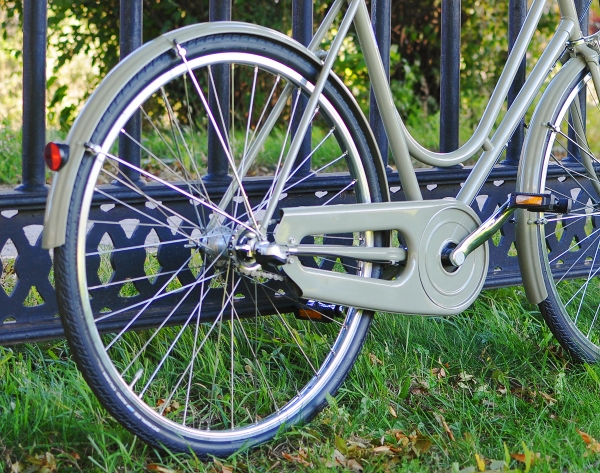 I like the elegant chaincase, and the interesting thing, is that despite being steel it is absolutely silent.
Somewhat disappointing though, was the choice of theShimano3-speed hub and gear shifter for such a classic bicycle. TheShimanocertainly works fine, but the excruciatingly high-tech looks of the hub and shifter disrupt the bicycle's classic charm. Personally, I feel it would have been better to use theSturmey Archerhub and shifter on these bikes - though I suspect others will disagree.
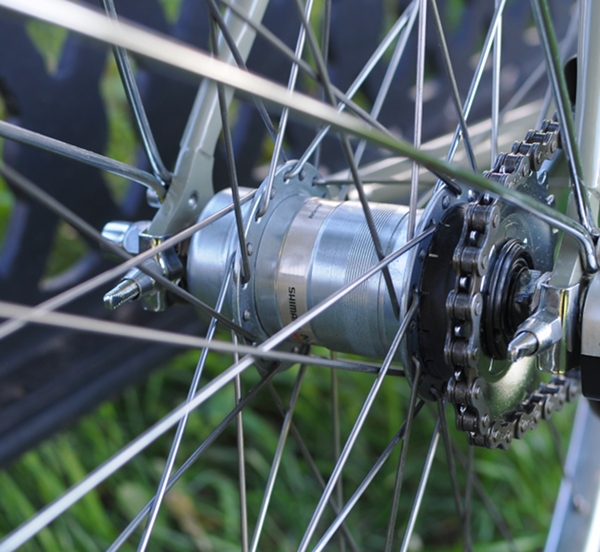 The Bella Ciao has straight fork ends, which I prefer on an internally geared hub bicycle. There are also chain tensioners installed - a detail the Co-Habitatant found especially exciting.
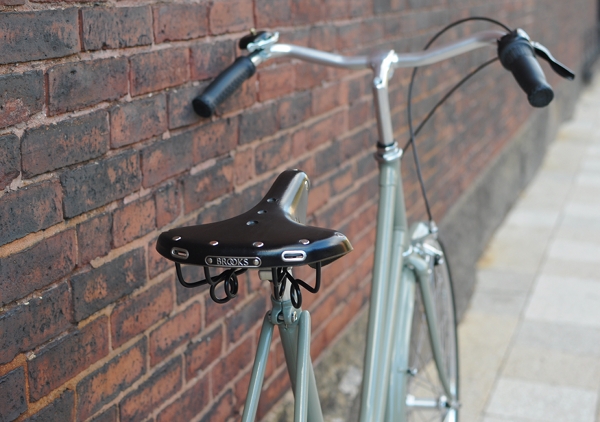 The bicycle arrived to me with a Brooks B17S saddle, but I immediately replaced it with a B72. I am not sure why both Bella Ciao and Abici use B17 saddles on their city bikes, but I think they need to rethink this choice - it is not an appropriate model for an upright ride, especially for women. The B72, on the other hand, feels absolutely at home here.
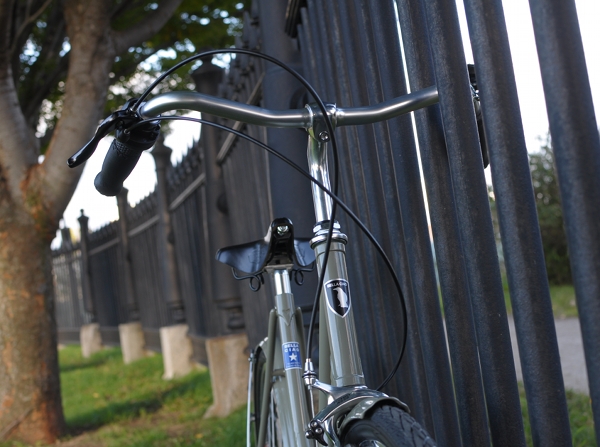
 As long as I am doling out criticism, I will also mention my perplexity over the choice of brake lever: I believe it may be an interruptor lever, because it is very short. The Tektrofront caliper brake provides excellent stopping power and the lever is squeezable, but it's just not the right one for this type of bicycle. A normal, full-size city lever would be more suitable.
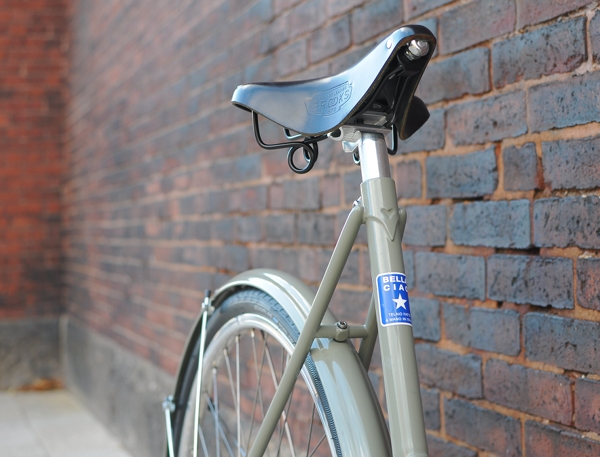
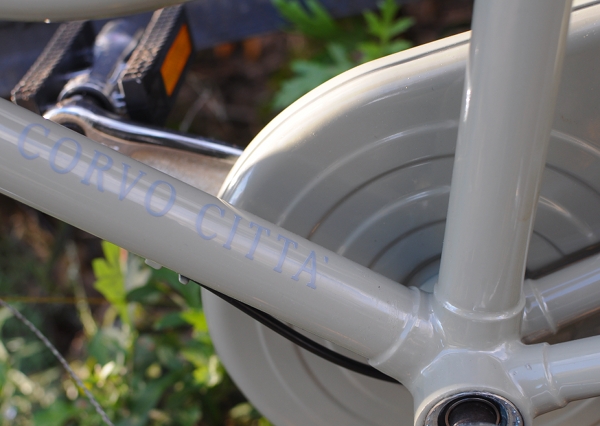
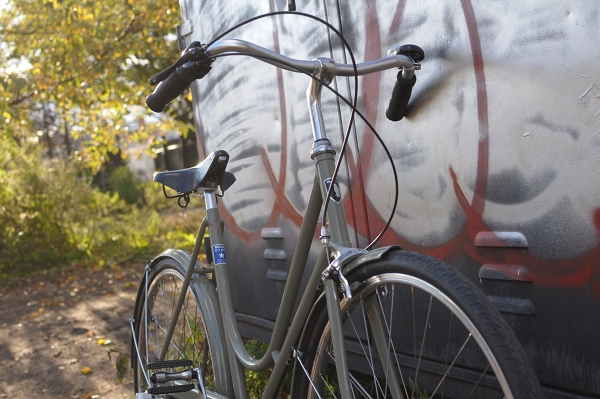 The minimal insignia on the Bella Ciao include a small headbadge on the head tube featuring the black raven logo, the "Corvo Citta" model name inscription near the bottom bracket, and a "fatto a mano in Italia" sticker on the seat tube.
And one thing I should definitely mention is the handlebars - which are proprietary Bella Ciao. They are shaped similarly to Porteur handlebars, but with just a tad more flare-out to them. The shape is super comfortable for my hands and seems perfectly matched to this bicycle's geometry.
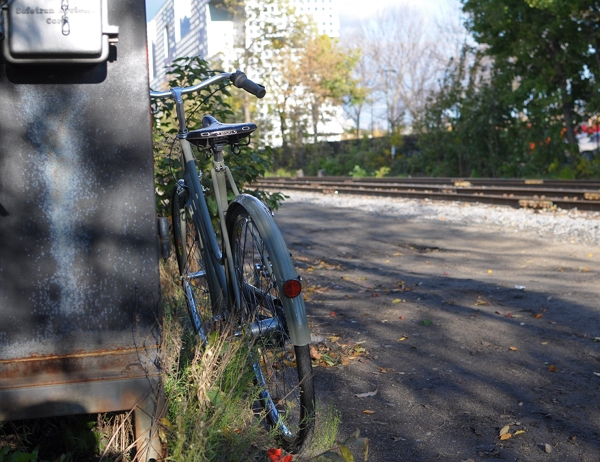 Moving on to ride quality... The most notable sensation I got from the Bella Ciao, was that it did not feel like a new bicycle. It felt very familiar, like an old bike that I have always owned.Lovers of classic bicycles complain that "there is no such thing anymore as a simple, well-made, lugged steel 3-speed bike". Well, I think the Bella Ciao isexactlythat. It is easy. It is comfortable. It is uncomplicated. It is not as laid back as a Dutch bike, but definitely not too sporty either (more relaxed than an Abici). It is maneuverable but unaggressive. It is just a bike. A very nice bike that anybody can ride, and that is light enough for anybody to lift.
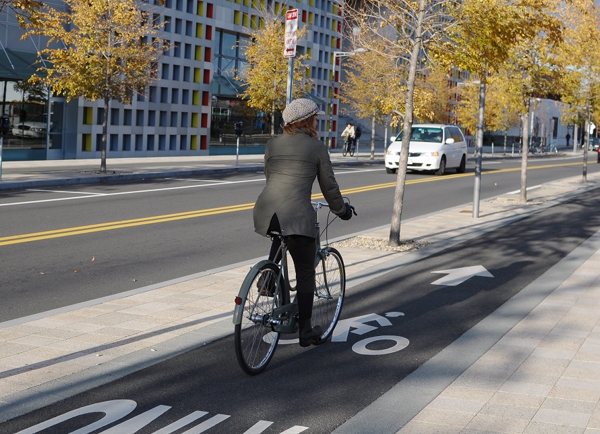 When a bicycle is this easy, comfortable and undemanding, you end up riding it all the time... which, ironically, ushers in my next complaint: Where are the lights? And more importantly, where is the rack? I would love to ride the Bella Ciao regularly for transportation, but there is nowhere to attach my bag and all the other stuff I take along, which is frustrating. The design of the bicycle will accommodate the VO Constructeur rear rack, and when I have the money I might get one. But I think that a rack in the style you see on some of these bicycles would be more appropriate. Anybody know where I could source one?
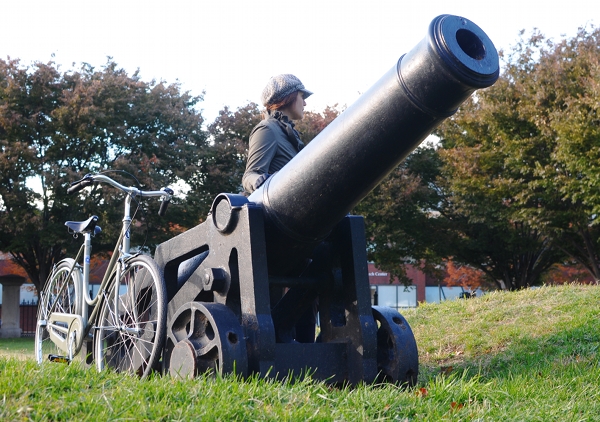 The Bella Ciao"Corvo Citta Donna" might just be the closest I have tried to an "all around, normal" bike out there today among classic lugged bicycles. And that was rather unexpected, given the quirkiness of the manufacturer's self-presentation. Free-association collages, stories of resistance against fascism - it is enough to raise the eyebrows of some and to make others wonder whether Bella Ciao is in reality a contemporary art project rather than a real bicycle company. Well, I suppose there is no reason it can't be both...
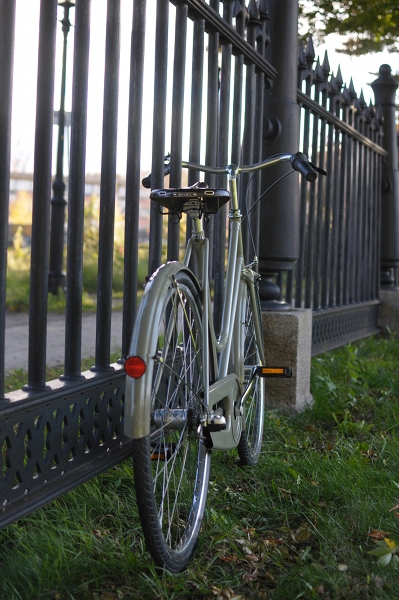 Though currently only sold in the EU, Bella Ciao is considering North American distributors and the bicycles may be available for sale in the US sometime in . The Corvo Citta Donna would certainlybe welcomed by women looking for more options in classic city bicycles.


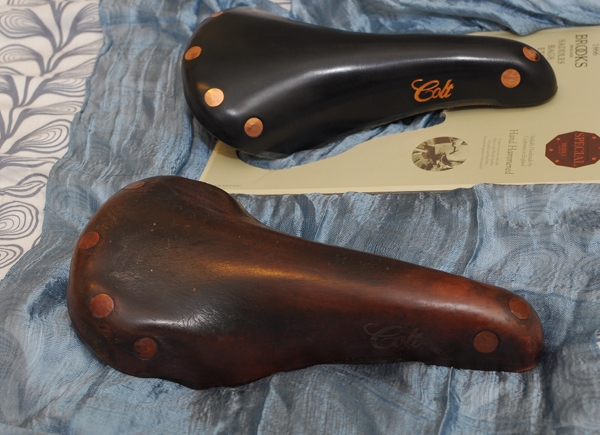 I have a new-releaseBrooks "Colt" saddle on loan from Harris Cyclery (for comparison with the Gilles Berthoud) and have just received a vintage "Colt"from a reader to try out as well. The weather we've been having has not allowed me to ride either of them just yet, but I thought a side-by-side comparison might be useful for those who are wondering how the re-released version compares to the original (produced 1979-2001).
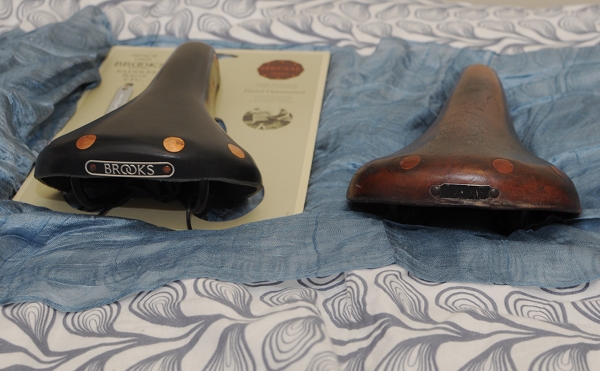 What attracts me to the "Colt" model, is its shape, which in some ways resembles theSelle Italia "Turbo" and similar models of 1980s Italian racing saddles. Those saddles have fairly narrow (but not too narrow) platforms that gently curve in a way that feels very comfortable to me. But while the foam, plastic and padded leather surfaces of the "Turbo" style saddles start to bother me after a while, the suspended leather of the Brooks "Colt" should solve that problem.
 Like the '80s Italian racing saddles, the "Colt" has a fully covered, squarish, down-turned nose. It is the only Brooks model where the nose is styled in this manner, and to me the design holds the promise of anatomical comfort. The new and the vintage versions of the "Colt" appear to be identical in form, dimensions and basic construction - differing only in colour, in the shape of the Brooks placket in the back (see previous picture), and, of course, in the amount of wear.
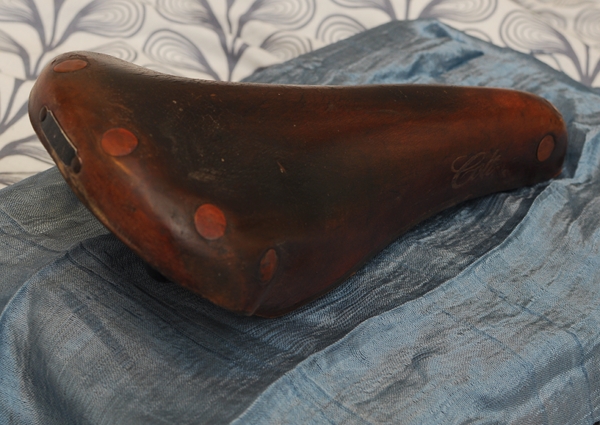 I have two roadbikes for which I need saddles, and I have more or less decided to keep theBerthoudfor one of them. For the other, I would ideally keep the vintage "Colt," and return the new one. One reason I prefer the vintage version is the classic, rich brown colour (the only normal colour the new release comes in, is black - the other options being purple, mustard, turquoise and hot pink). The other reason, is that everyone complains about the "Colt" being difficult to break in, and the vintage version looks like it has most definitely been broken in by the previous owner.
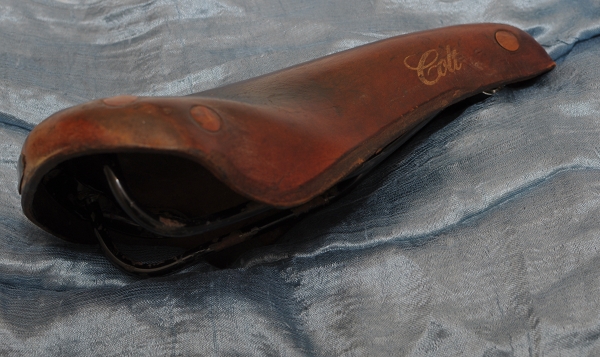 On the other hand, the vintage saddle may in fact be too broken in. The colour variations in the leather make this difficult to capture in pictures, but basically the sit bone indentations from the previous owner are so deep, that a narrow, raised ridge has formed along the center of the saddle. There are several online tutorials that give instructions for re-shaping saddles that exhibit such distortions, and I am considering doing this. The process (as described by Hilary Stone) basically involves getting the saddle wet, then stuffing it with paper and reshaping it as it dries. Curious about the experience of those who have tried it!

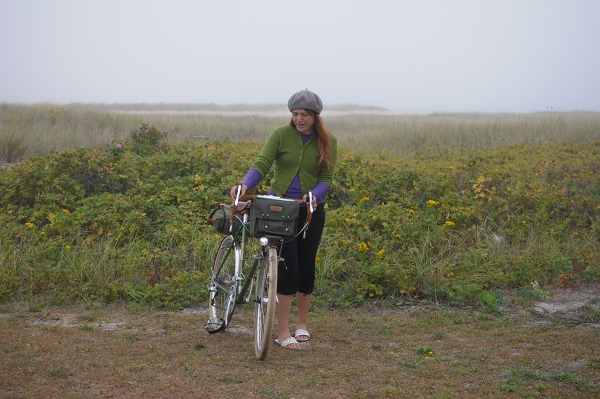
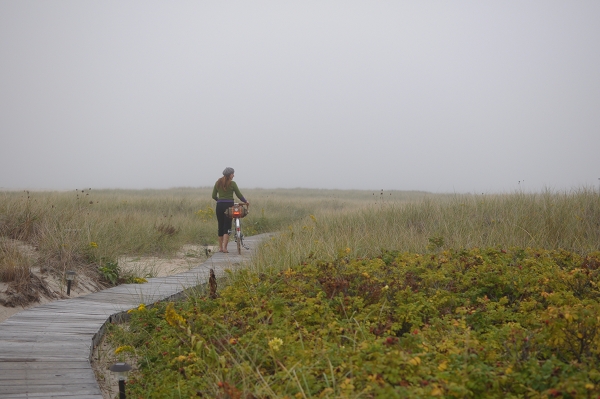 Have you ever cycled in a dense fog?
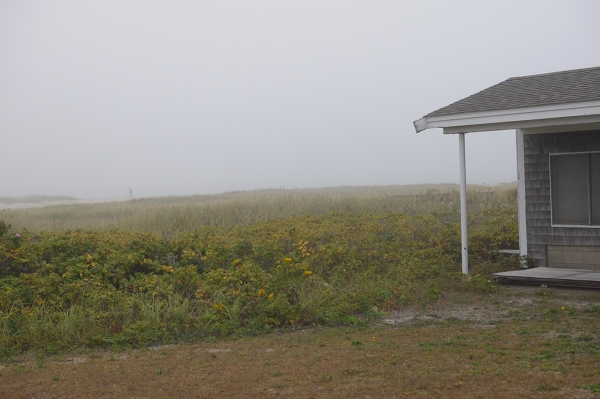 For the past couple of days, we have been surrounded by this stunning, surreal landscape. There is no distinction between sky and ocean. The dunes, grasses and rosehip bushes are wrapped in a milky whiteness. There is a tornado warning in effect, but for now everything is eerily calm.
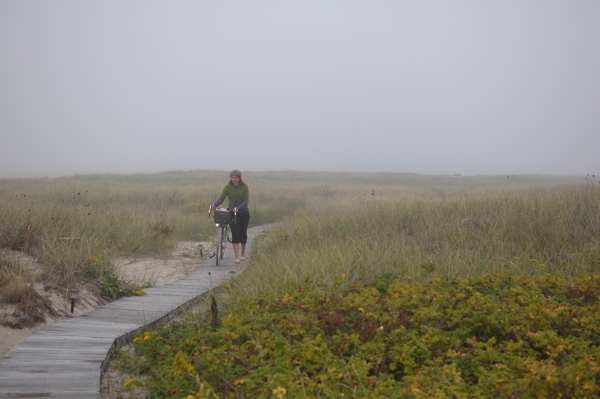 To watch someone approaching through the fog from a distance has always fascinated me. It looks as if the person is coming from nowhere, or from the sky.
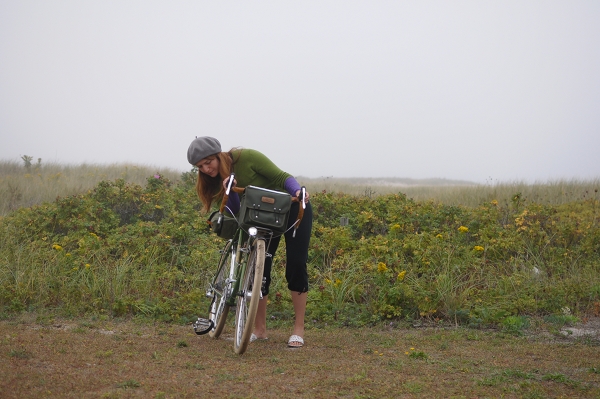 I took the opportunity to see how Graham's lights would perform in these conditions, and they were fairly well visible - even at slow speeds.
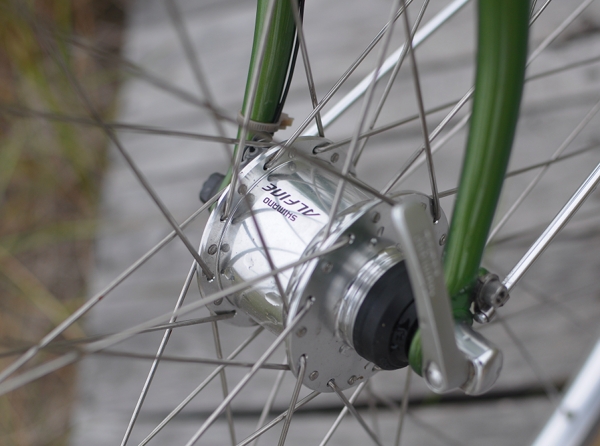 The lights on my Rivendell Sam Hillborne are powered by a Shimano Alfine hub.
 The headlight is aBusch & MüllerLumotec IQ LED Cyo Senso Plus, and its performance is stunning.The beam is not just powerful, but surprisingly large -so that cycling in the dark feels as if there is always a street light on. There is a standlight feature (the light remains on for a few minutes after the bicycle stops), as well as a "senso" feature, whereby the light turns itself on and off depending on how dark it is.
 The tail light is aBusch & Müller 4D-lite Plus, which has classic looks, 4 LEDs, and the same standlight feature as the headlight (though the Co-Habitant thinks the standlight on this one is not sufficiently bright).
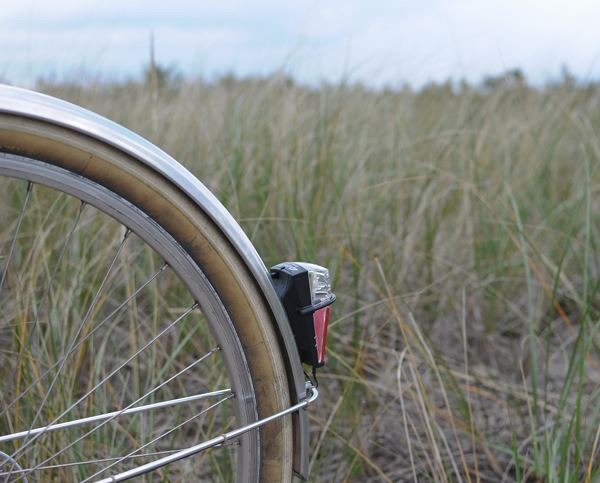 An additional feature of this tail light is that it is surrounded by a metal cage, which prevents the light from being damaged when it is bumped. This is very useful when the bicycle is dragged through doors and left at bike racks.
 I am confident that others can see me in the fog with the light set-up I have on this bicycle. Seeing the road, however, is another matter. What do randonneurs do in these situations? I cannot imagine that any bicycle light can really be strong enough to act as a true fog light in the daytime.