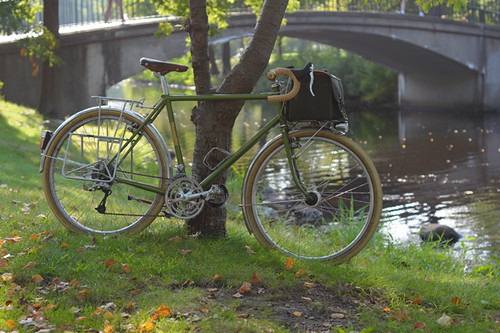
 Cycling along the Charles River last week, I stopped to enjoy the scenery and eat an apple, when a smiling couple approached me. They had seen a bike like mine at Harris Cyclery and the woman was considering getting one. She asked to have a closer look and examined it with admiration.
But her smile quickly fell when she tried to pick it up."Oh my God! I don't remember the one at the bike shop being this heavy!" Oh boy, I thought... Did I just ruin a sale for Harris?As a general observation, I get the sense that when people shop for bikes they often don't take into account which components and accessories the floor model is fitted with. And this can give them an inaccurate sense of what the bicycle would actually be like to use in everyday life, once they fit it with all the cool things they read about on the internet. They don't think it can possibly make that big of a difference. But of course it does.
The first time I tried a Rivendell Sam Hillborne, the floor model was a basic build fitted with 35mm tires, and no lighting, fenders, or racks. Sure, it felt fairly light.
However, when my own bike was assembled, it got a dynamo hub, 42mm tires, aluminum fenders, a headlight, a tail light, a kickstand, a waterbottle cage, a stainless steel waterbottle, a computer, Power Grips, and a brass bell. Taken individually, each of these items seems hardly worth mentioning. But taken together, I could feel an obvious difference between my own bike and the floor model.Several months later,I added a front rack. And then a handlebar bag. Naturally, the bike got heavier still.Finally, a year later I added a rear rack with removeable lowrider panels, which I don't always bother to remove.
Moral of the story? It's real easy to turn a <30lb bike into a 40lb bike. Every extra component, every rack, bag, basket and other accessory we pile on adds weight - not to mention the stuff we end up carrying in those bags and baskets. And that's fine - that's normal and good, as all of those things are usually done to add functionality to the bike. But let's be fair and compare like to like. When bicycle shopping, beware that a floor model may appear lighter than your own bicycle, without actually being lighter once you set it up in the same manner.


 We drove from Amman, Jordan's capital city all the way down to Petra and then Wadi Rum. Wadi Rum is about 60 kilometres from Aqaba. Map courtesy from Lonely Planet.

 The Visitor's Centre, a few kilometers outside of Wadi Rum. The foto on the big poster is the King of Jordan, King Abdullah II bin al-Hussein.
 The Bedouin brother of our guide.
 4x4 Jeeps for rent for Wadi Rum Desert adventure tours.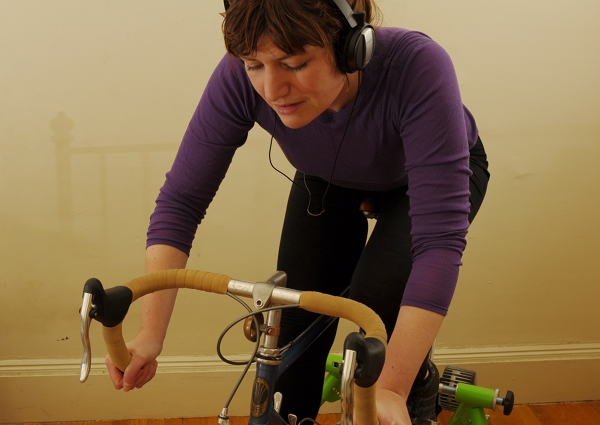
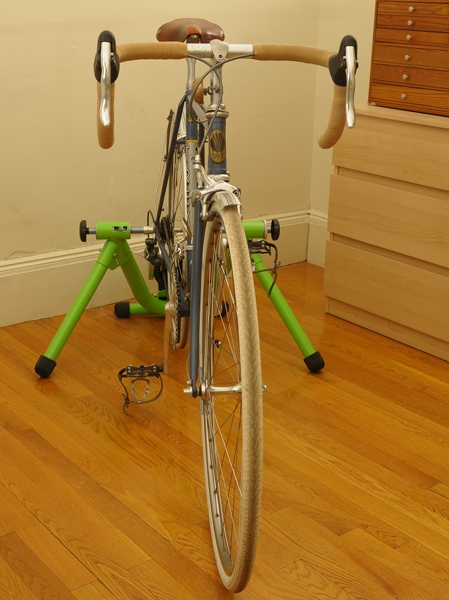 And so, since last week I have been the owner of aKurt Kinetic Road Machine Fluid Trainer. The model was on sale at the Wheelworks in Somerville, MA (they had four left as of last week), and the opportunity was ceased. It is lime green and in no way blends in with any normal household decor. It is a good thing we have a "bohemian" apartment where pretty much anything goes, including a bike plugged into a neon contraption in the middle of the bedroom.
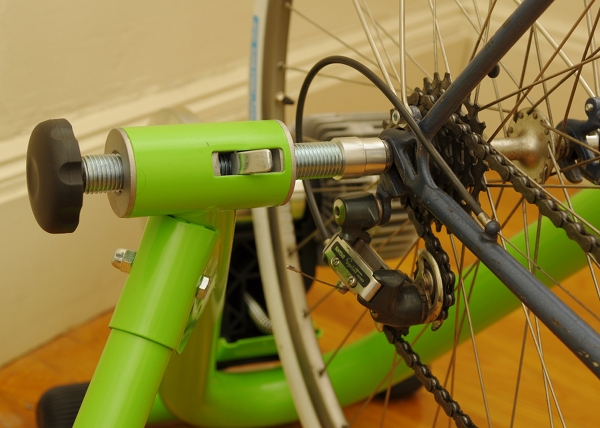 To set up the trainer, you have to attach the rear wheel of the bicycle using a special skewer, so that the tire rests firmly against the mechanism which provides resistance. I would describe the set-up process as somewhat tricky: You have to align the wheel just right and tighten everything just so.
 As you pedal, the resistance from the trainer is similar to the resistance you feel when cycling on the road.Beyond that, I admit that I have no idea how it works, and am not particularly curious as long as it does the job.Some prefer to put a block or a riser under the front wheel, but I feel fine without it.
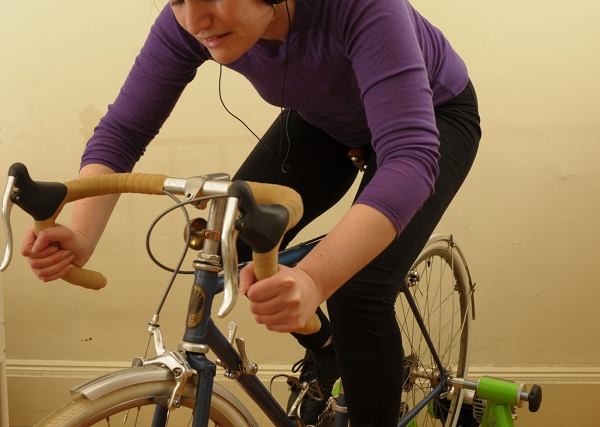 To me, using the trainer emulates the cycling experience realistically insofar that I am on an actual bike, and that the sensation of pedaling really does feel like being on the road. What's different, is that the bicycle doesn't lean, as would have been natural on the road, and - oh yes - that I am in my bedroom, staring at a wall and going absolutely nowhere. After the first time I used the trainer, it became clear that I needed visual stimuli - music alone was not sufficient to counteract the mind-numbing effect of looking at nothing.
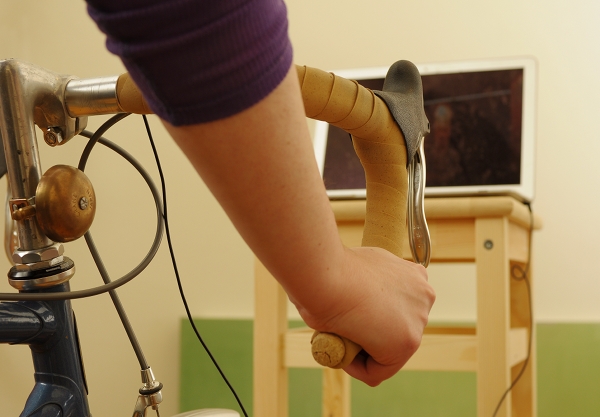 So I rigged up this "tower" using two wooden chairs (don't worry, they are very stable), which allowed me to place my laptop at eye level.
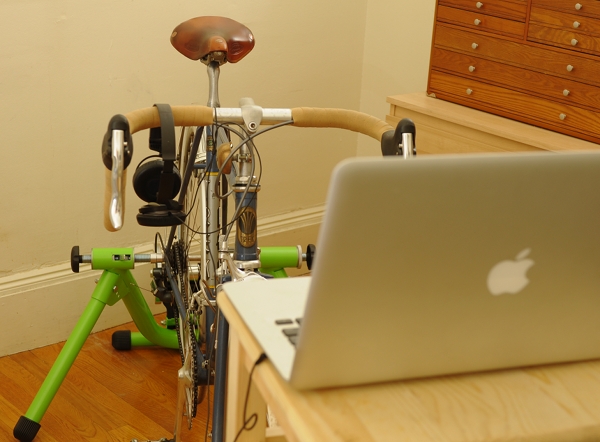 Thank goodness for Netflix and enormous earphones. The trainer is fairly quiet to begin with (the sound it makes is a sort of low hum - not high pitched or annoying), and if I had a TV rather than a tiny laptop, I don't think earphones would even be necessary. But the nice thing about using them, is that they drown out the sound of the trainer entirely, making it easier to get absorbed in the film and put my legs on autopilot.
 It took me a couple of days on the trainer to learn how to pace myself. I guess on the road, there are factors that control my speed - traffic lights, obstacles, turns, and even just fear. With these factors gone, I had to keep forcing myself to slow down, so as not to get exhausted immediately. Watching a movie helps, because my pedaling starts to sync up with the highs and lows of the film - slowing down during the quiet parts and speeding up during the exciting parts. At the moment, I am able to keep going for 40 minutes at a time before needing to stop, but I am hoping to make it an hour by next week.
 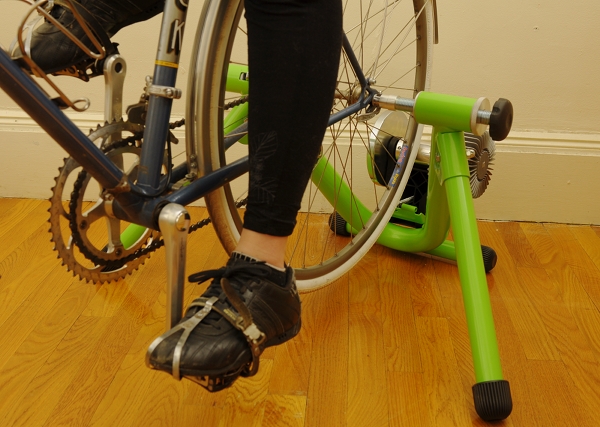 I don't want to give the impression that the trainer is anything other than what it is - a device that allows you to pedal your own bicycle as it remains stationary. The experience does not even begin to compare to "real" roadcycling, which to me is much more about exploration than about exercise. But if I approach it from the other end, and start with the given of wanting indoor exercise that emulates cycling, this trainer pretty much fits the bill. Having never tried others I can't compare, but the Kurt Kinetic trainer does everything I imagined a trainer doing, and it is quieter than I had hoped.
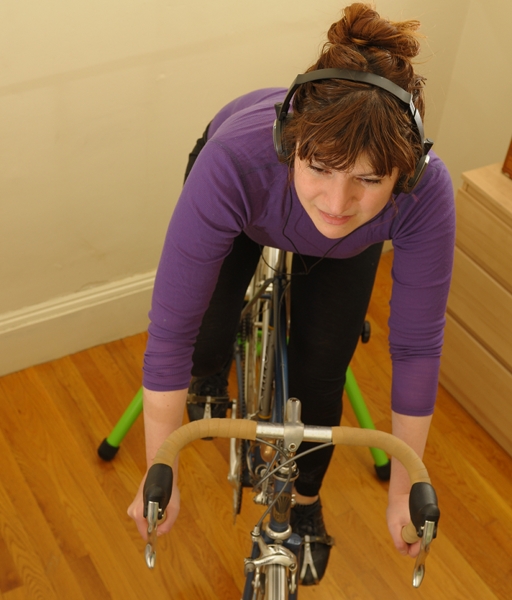 I think I have to face it that something in me has changed over the past year, and I now feel that my body "needs" strenuous exercise. I never thought that would happen to me, and I don't understand human physiology well enough to know how that works. All I know is, that I've been on a roadbike every day for the past week and I am feeling a little more like myself again. It's indoors, it's stationary and it's not real cycling - but I'll take it.
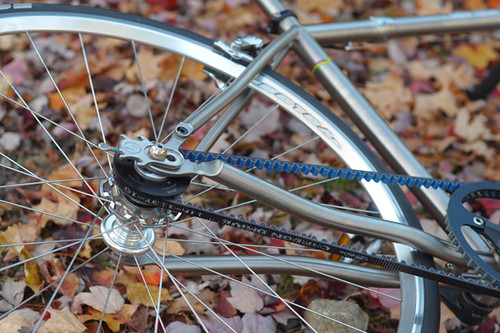
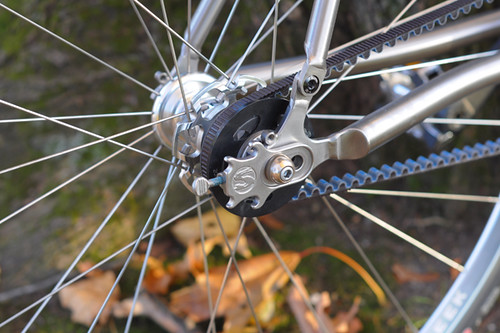
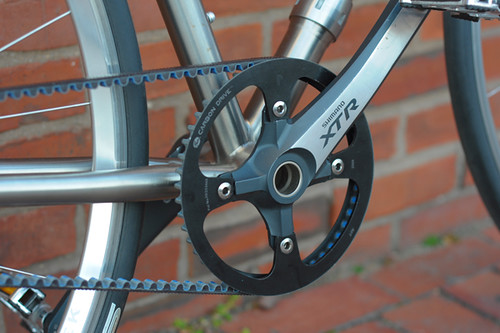


 The view from my front door. Doesn't look too bad? Well, there is about three inches of compacted slush, snow, ice and sleet in the drive. I haven't ventured out to the mail box yet. No traction. The pictures were all taken within 20 feet of the apartment and I used the flash to get some definition and contrast.


 I was having a political discussion with a friend over email, and in response to something I wrote he replied: "You know, it's really starting to show that you haven't been out of the US in almost a year." Ouch... But the "insult" aside, I realised he was correct: I haven't been out of the country since last July, which is unusual for me. Moreover, we have been without a car since December, making our travel radius limited to cycleable distances. Without explicitly being aware of it, I have transitioned from living "globally" to living "locally," and my friend's insinuation was that this has made me narrow-minded and provincial. Has it? I think not, but I also realise that I don't really care. My quality of life has improved as a result of the changes I've made since last year, and that's difficult to argue with.
 But the issue of living locally vs globally has personal, psychological implications as well, and these have been on my mind lately. I have an unusual personal history, and have basically never lived in any one place for more than several years at a time. As a result, my life has been fragmented and unstable, which I do not feel is ultimately good for me.When I remember things from my past, I sometimes get confused about the location of an event, and even about the language that was spoken.With my friends, relatives, experiences and memories scattered all over the world, it is difficult to maintain a sense of continuity and even a coherent sense of self. Forming healthy attachments to new people and places is challenging, and replacing the physical reality of personal interaction with virtual communications is isolating.
 I thought that I might feel limited and stir-crazy once I stopped traveling abroad, and even more so once we began living without a car. Instead I am feeling as if some long-neglected human aspect of me is waking up. Living locally and all that it entails - seeing the same people, experiencing the change of seasons while staying put, and developing a feel for manageable distances - is giving me a sense of continuity that I have been lacking.
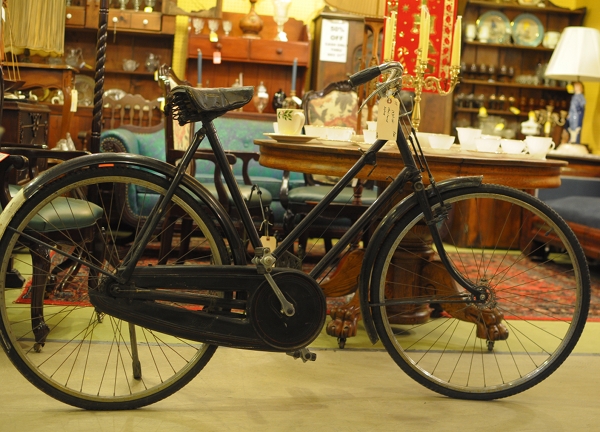 Used and vintage bicycle shops can be great resources on a number of levels. For the beginner cyclist, they can provide clean, tuned-up alternatives to the treacherous waters ofCraigslistandebay. For the DIY tinkerer, they can be a source for older parts and accessories. And for the seasoned collector, they can, on occasion, offer up a gem of a bicycle that one would not normally come across elsewhere. A vintage bike shop is certainly worth a visit, if one exists in your area. In Boston, we are lucky to haveOld Roads- located in theCambridge Antiques Market, just a 15 minute bike ride from my home.
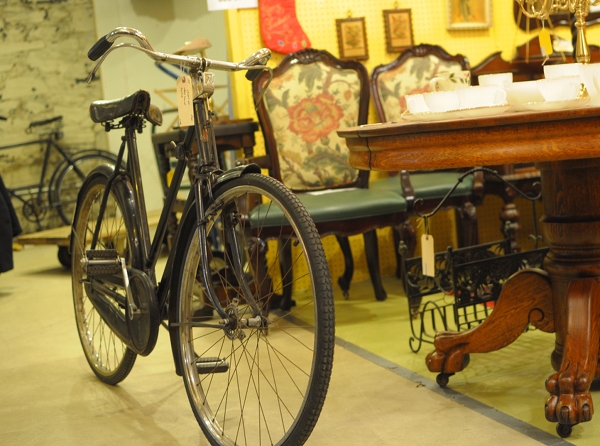 Presuming that most of the bicycles offered are found locally, vintage bike shops are in a sense like museums of history: They give you an idea of what kind of bikes were popular in your area over decades past. It amazes me that no matter how many of these bikes are sold (and I've personally played matchmaker in several deals), Boston does not seem to run out of its stock of early full-chaincase Raleighs. Just imagine how many of these things must have been on the streets in the '30s-70s. The model above is an original early 1930s version.
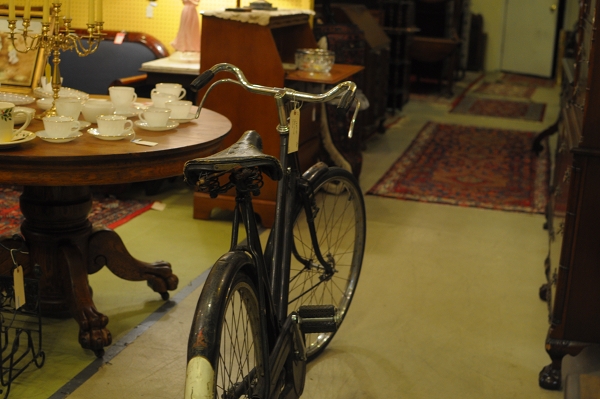 (Cuppa tea?)
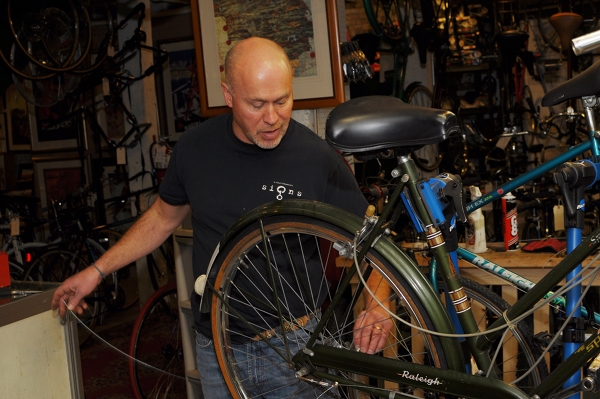 Situated in the dungeon-like basement of the Antiques Market (formerly a coffin factory!), "Old Roads" is really a joint project between two shops:Menotomy Vintage Bicycles, owned by Vinny,
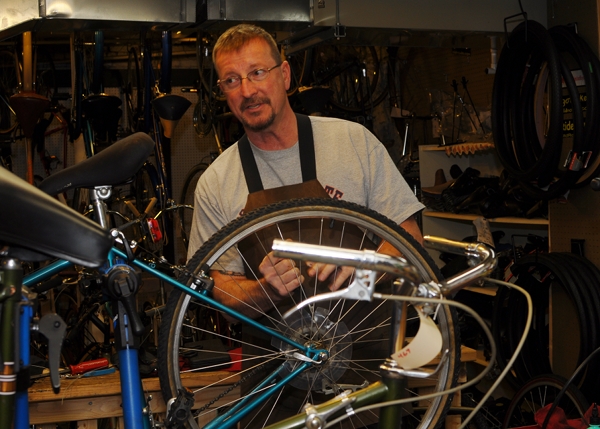 and Cambridge Used Bicycles, owned by Ed. They began selling bikes out of this space in , and have since become a staple of the vintage bicycle scene in the Boston area.
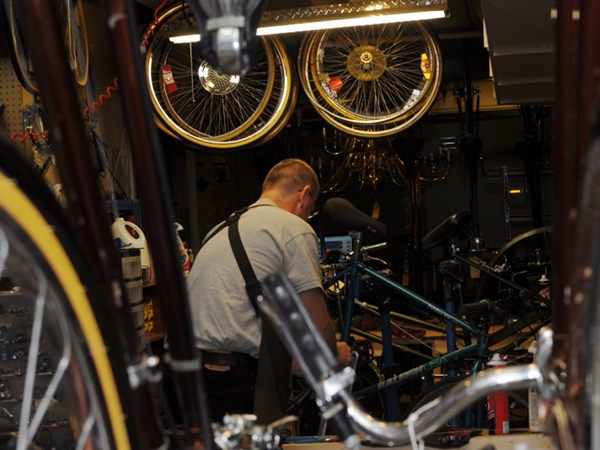 The full extend of their inventory is impossible to capture, due to the sprawling, cavernous nature of the space - which makes being there in person all the more exciting. There are rows and rows of vintage bicycles - on the floor, on the walls, on the ceiling, everywhere you look really.
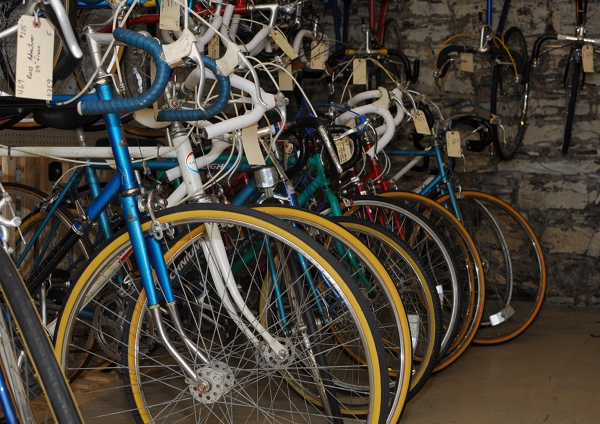 Though initially, the focus of the shop was meant to be on antique bicycles, it soon became apparent that the local population was mostly interested in reliable 3-speeds and 10-speeds from the 1960s through the early 1980s, to be used as transportation. And so, increasingly, the inventory began to accommodate this. Now the shop offers a stagerring variety of bicycles, in one of five categories: vintage 3-speeds, vintage roadbikes, early vintage cruisers, antique bikes (pre-WWII), and some used newer bikes from the 1990s onward - including a couple of hand-painted "fixies".
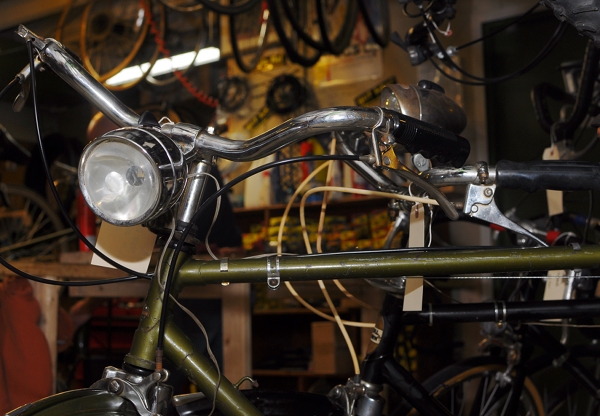 For me, the 3-speeds are the biggest attraction. There are dozens of them, both men's and ladies'. Though Raleigh and Schwinn are the names you will see most frequently, more unusual offerings are often found as well.
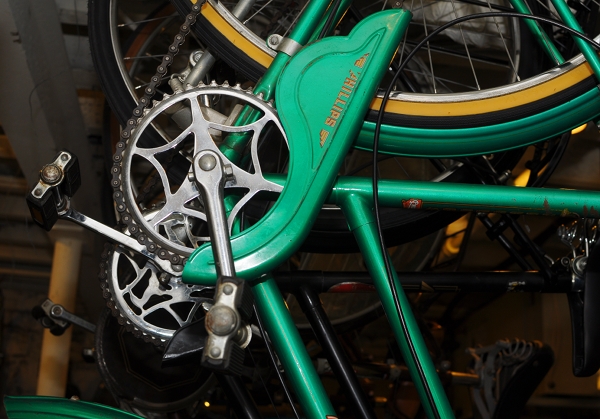 Phillips, England
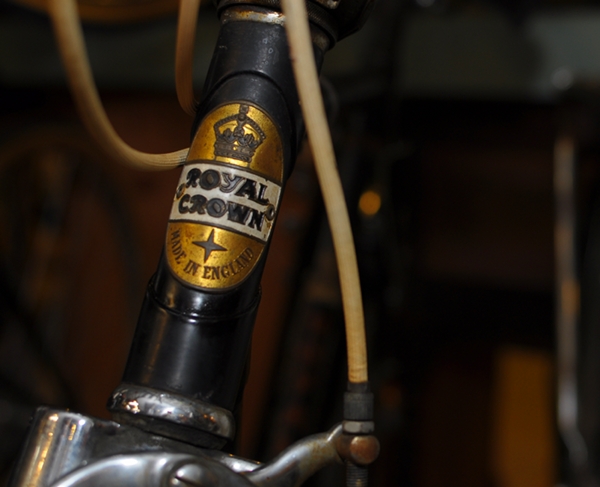 Royal Crown, England
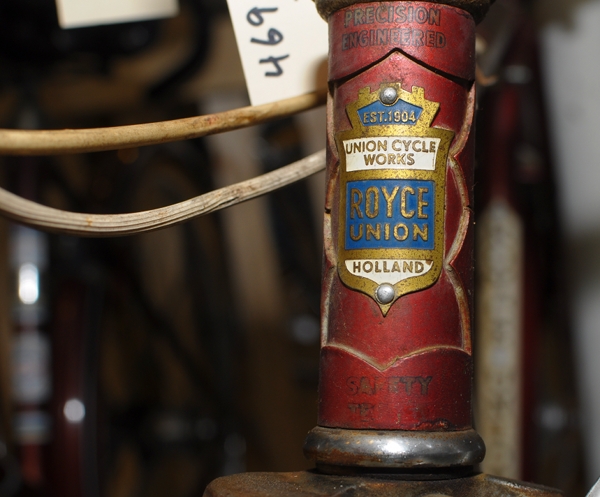 Royce Union, Holland. And there are many others. With chaincases and without, English and Dutch, step through and diamond frame, some even with the original dynamo lighting.
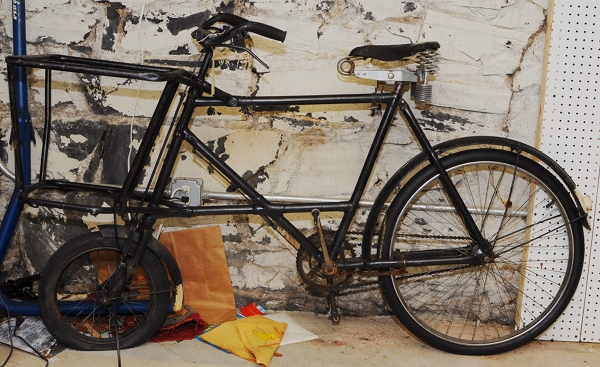 And of course the antique offerings never fail to impress. The above is a Butcher's bike, most likely from the 1920s.
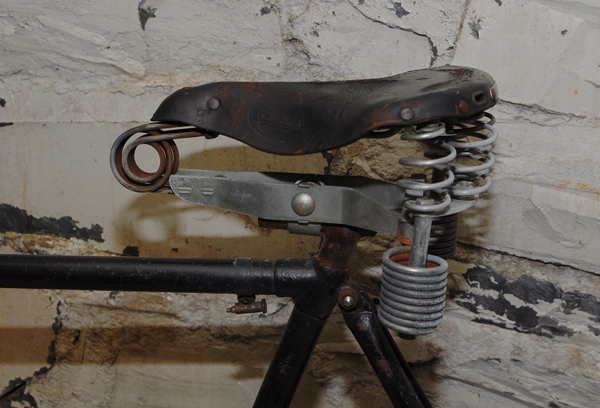 I am guessing this butcher was a heavy guy!
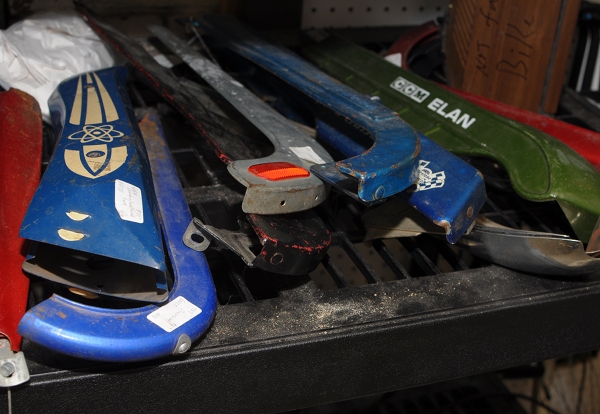 There is also a slew of accessories in stock, including chainguards, handlebars, saddles, tires and racks.
 Even vintage bottle generators are available, for those who find the modern ones too high tech.
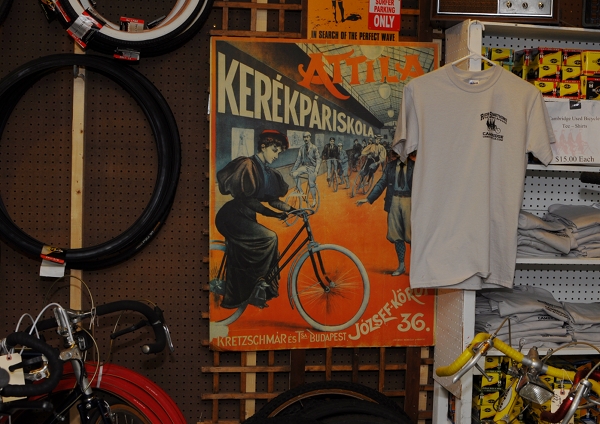 Ephemera and t-shirts, too.
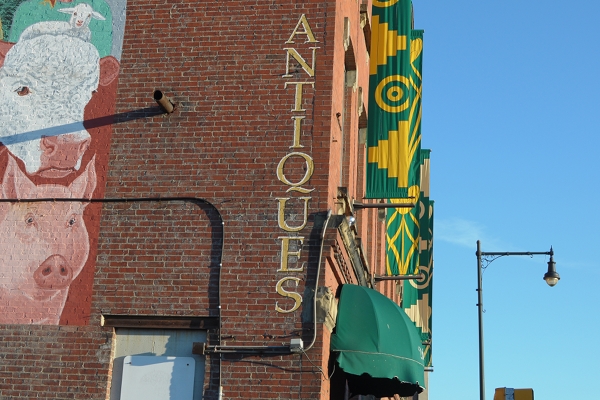 In addition to its physical presence, Old Roads offers a number of online resources for the Boston area and beyond. They host a message board where visitors can discuss a multitude of topics pertaining to vintage bikes, as well as post for sale/ wanted ads free of charge. They offer a price guide for used and vintage bicycles. And they sell some interesting hard to find parts online. While in the summer, bicycles are sold only locally, during the winter they can be shipped outside the Boston area as well. For those looking for a vintage English 3-speed in clean condition, this can be a good option if your area has a shortage.