Monday, June 29, 2009

James Joslin :: 1840 Whitley County Federal Census

In this previous post we learned that James Joslin "of Delaware County, Ohio" purchased 80 acres of land in Whitley County, Indiana from the U.S. Government in September 1837 and that it was patented in August 1838.

We don't have a firm date as to when James and his family arrived in Whitley County but on page 227 of "Counties of Whitley and Noble, Indiana" (edited by Goodspeed & Blanchard, 1882) it shows that James Joslin was among the 12 residents of Troy Township to cast a vote in the first Presidential election held on July 4, 1839. And, in "Recollections of Early Troy by Mrs. Fannie Marrs" published on page 253 in the 1907 "History of Whitley County, Indiana" (edited by Kaler & Maring) she states "My father, Price Goodrich, landed here in June, 1838. James Joslin, John Black and Harlow Barber, with their families, came in 1839."

There are a myriad of spelling variations for the "Joslin" surname. Just change the o to a, the s to c or sc or ss or sh, the e to y or omit it entirely… so I generally use the wildcards "Jos*" or "Jas*" for searches when wildcards are allowed. Some of the spelling variations that have been found are: Jaaslin, Jaclen, Jaclin, Jaclyn, Jaslin , Jocelin Jocelyn, Joscelin, Joscelyn, Joselin, Joshlin, Joshlyn, Joslyn, Josselyn, Josslin, and Josslyn. On one occasion it was spelt Gloslin, but the vast majority of the time my particular family has been found as Joslin.

A search of the ancestry.com online census index for 1840 using the wildcard search of "Jos*" shows two households with the surname of Joslin and one Joselin living in Indiana. There was also one household with the spelling of Jocelin and two with Jocelyn. The only household in Whitley County, Indiana in 1840 was that of James Joslin. (I have viewed every page of the 1840 census for Whitley County to verify that there are no other Joslin families included.)

James Joslin is the fourth name listed on page 455. Price Goodrich, probably a brother of James' wife Abigail, is the sixth name. A portion of the record, cropped from the ancestry.com image is shown below, click on the image for a larger version.


In the Whitley County Marriage books are records for 10 individuals with the "Joslin" surname. Five of them are for known children of Lysander Price Joslin. The remaining five are:
Fanny P. Joslin to Joseph Shoemaker on February 5, 1843 (1st Book pg 68)
Lysander Price Joslin to Lydia Robinson on August 23, 1843 (1st Book pg 76)
Emily Eliza Joslin to John Long on October 12, 1854 (Book 1 pg 187)
Edwin M. Joslin to Sarah Fellows on November 9, 1854 (Book 1 pg 182)
Joseph A. Joslin to Prudentia E Noble on June 2, 1861 (Book 2A pg 55)

Given the fact that James Joslin is the only "Joslin" household in Whitley County in 1840, it has been presumed that the individuals listed in the above marriage records are the children of James and Abigail Joslin. And, yes, I am quite aware that all of the "children" listed in a household are not necessarily the children of the head of household. That fact notwithstanding, and with additional research that has been done on each of them (sources available upon request), the household of James Joslin in the 1840 Whitley County census appears to be:

  • 1 male 5-10 [1830-1835...Joseph A. was born September 11, 1832]
  • 1 male 10-15 [1825-1830...Edwin Mattoon was born December 17, 1829]
  • 1 male 15-20 [1820-1825...Lysander Price was born May 1, 1825]
  • 1 male 40-50 [1790-1800...James was born about 1796]
  • 1 female under 5 [1835-1840...Emily was born December 12, 1837]
  • 1 female 10-15 [1825-1830...Fanny Philanda was born October 1826]
  • 1 female 30-40 [1800-1810...Abigail was born about 1805]

Sunday, June 21, 2009

Other Animals at Sea World

Most people know there are whales and dolphin at Sea World. Some know there are manatees and sting rays. There are a few other animals here too. Just a few pictures of the "other animals" we like there.

Orchids & Kitties


These are some photos of the orchids I bought the other day. They had been $12 and marked down to $3 because they didn't have the sence to water them and they had wilted badly. I was surprised at how well they came back. some of the blossoms were all dried up and fell of but the ones that were just kind of limp opened back up once they had some water.


Cassie


Twinkie

Roe-Dee-Oh :: Bull Riding

Sunday, August 21st - - The “main” event, the one that we waited nearly four hours to see, was the Bull Riding. There was only one rider that was able to go the full time but it was an exciting event, definitely worth waiting around for....


Saturday, June 20, 2009

Into the Park

Getting around in Denali National Park can be problematic. There is but one main road and, if followed to the end, it will take you 92 miles into the park. However, access to that road is restricted except for the first 15 miles. Beyond that point a special permit is needed and those are given to people using the campgrounds in the interior. Even then, once they get to the campground, their vehicle must remain parked until they are ready to leave.

Essentially, access to the interior of the park is via bus whether a park shuttle or tour bus. Both have a fee over and above the price of admission and in most cases, reservations are required. If you don't have reservations and you show up in Denali one day don't expect to be able to go beyond the 15 mile limit that same day!

Sue and Fred had made reservations for the Kantishna Experience, which would take them as far into the park as you can go. Several days after they made their reservations I tried to get the same tour but it was filled up! The next best thing I could get was the shuttle bus to Eielson Visitor Center, which was 67 miles in.

There are two primary reasons that the vast majority of people go to Denali – to see The Mountain and to see The Wildlife. Only 30% of those people will see The Mountain (it is hidden by clouds much of the time) but most will see some Wildlife though the most “prized” are Bear, Moose, Caribou, Wolf, and Red Fox. The further into the park you go the more likely it is that you will see them all, sometimes rather close.

Early Tuesday morning we made our way to the Wilderness Access Center to board the buses, which left within a few minutes of each other, mine following theirs out to the 67 mile marker.

A small section of the mountains in Polychrome Valley.

Grizzly Bear! One of two cubs who crossed under a bridge with their mama.

Dall Sheep. There were five of them scattered around the top and sides of this rock outcropping not far from the road.

These were the closest shots that I got. In total on the trip out and back, at various spots along the way (in other words not all at the same time), the bus I was on saw 20 bears (including 4 different sets of two cubs and mama), a moose with her calf, two wolf cubs, a lone wolf, a dozen Dall Sheep (most were “white spots” on the mountainside while others were “white spots with legs”), quite a few small herds of Caribou, and one Bald Eagle. I gave up on taking pictures since most were so far away. I did see them somewhat “up close” though with the binoculars and they were quite splendid.

Though our buses were only a few minutes apart, we didn't see the same wildlife. Sue got some terrific shots, some quite close. Please, go check out her photos! You'll be glad you did...

And, we got lucky for the second day in a row – Denali was “out” once again!

This is from about 35 miles away from The Mountain. Everyone on the bus was thrilled to be able to see this much of Denali.

I like how you can see parts of the mountain through the clouds.

The peaks are two miles apart!

Twenty minutes later, at the Eielson Visitor Center, Denali was nearly obscured by the clouds.

Gone! Denali is to the left of that center peak. I stayed at Eielson for more than an hour and The Mountain didn't come back out.

Thursday, June 18, 2009

More About our Bok Tower Gardens Trip


As I said, this was Nathan's first trip to see Bok Tower. It was really overcast and looking like rain, so there wasn't a big crowd there. Which made it a nice day to visit.


As soon as you enter the front of the visitor center, you can see that this is going to be a pretty place.


Clearly this was a personal goal of Mr. Bok, as is shown in the quote over the entrance.


I think he definitely achieved it with this place.


The main attraction is still the tower, with the beautiful carillon music coming from it each day.


CALLING GARDEN PRODIGY


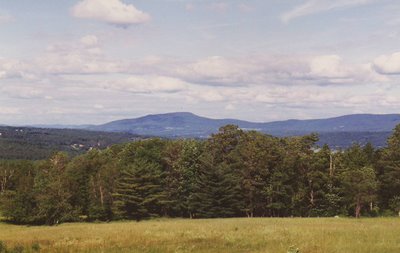
When you look at this photo the conifers might tell you that it wasn’t taken in Texas – in fact it wasn’t taken in this century. A woman named Pam snapped the shutter in June of 1993, as she looked out on the Vermont countryside from the Tearoom of the VonTrapp estate. Pam was part of a group of gardening friends who were touring New England, but not as part of a garden club or a horticulture class. Back in those pre-blogging days, they’d all met on the Prodigy garden bulletin board, where they found soulmates – other people who were obsessed with perennials, bulbs, flowering shrubs and creating personal landscapes.

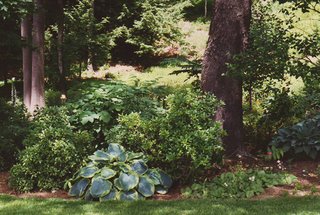
The Prodigy gardeners went to Readsboro, Vermont where these Hostas graced the grounds of North Hill. Garden authors and partners Joe Eck and Wayne Winterrowd started this garden in 1977 and thirty years later, they’re still holding open days for groups and fundraisers.

I was one of those long ago perennial maniacs, going online as Kat in N-IL whenever I had time to spare. Despite having only plain text to express our thoughts, slow response times, single phone lines with dial-up, and no way to post a photo or a drawing, it was addictive and exhilarating. Since I couldn’t meet with the others in New England, the garden at North Hill and the Von Trapp estate came to me in photos sent around the country after the trip.

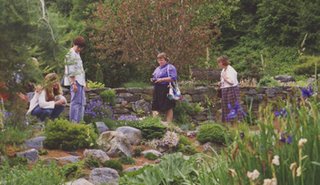
This is also from Vermont - I think it's at Cady's Falls Nursery in Stowe. We never met in person so I can’t even put names to the faces, but loved their words and wonder where they are and if any of them are now garden bloggers, too.


Shout out to all you Gardeners from the Prodigy bulletin boards – Niko in Norwalk, Connecticut, Allen in Linwood, New Jersey, Marion from Waterbury, Vermont, Denise in Minnesota, Ellen & Deb from Illinois, Margaret in New York, Pam in Mechanicsburg, Pennsylvania, Bargyla in San Diego, California, Don from Saginaw, Michigan, Joyce in South Carolina, Nancy from Norcross, Georgia and all the others - I hope you’re still in the garden!

Wordless Wednesday :: Schooldaze ~ Third Grade

Wednesday, June 17, 2009

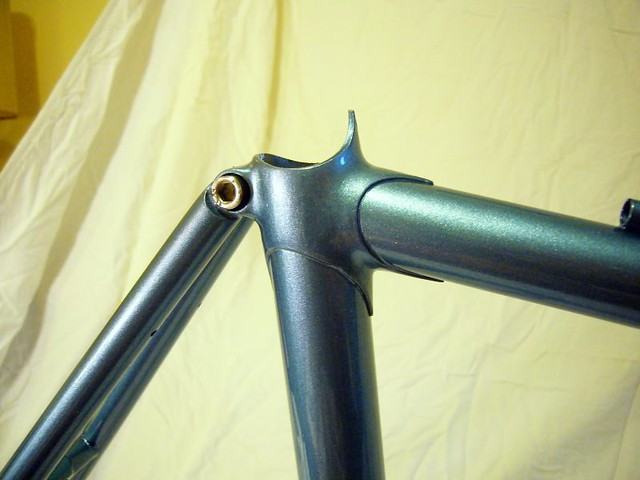
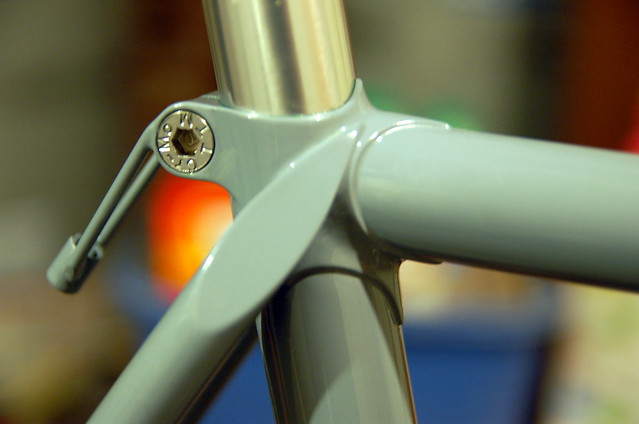
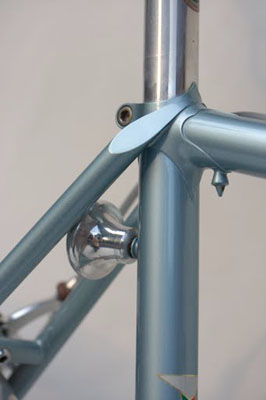
The Seat Cluster: a Starburst of Lugwork

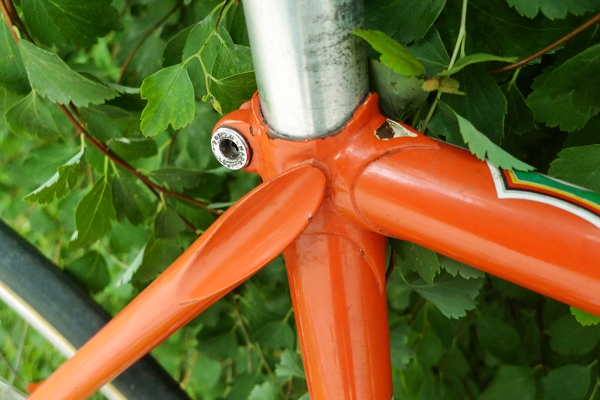
One of my favourite parts of a bicycle frame's anatomy is what's called the "seat cluster" - the joint where the seat tube, the top tube, and the rear stays of the bicycle meet. If done nicely, the seat cluster can look like a beautiful starburst of lugwork, and that is what I love about it. On the picture above is the very classic seat cluster on the Waja trackbike I rode in Vienna earlier this summer.

A similarly classic seat cluster on the Rivendell Sam Hillborne.
[image via Franklyn W]

And another example from an Ebisu bicycle. You can see how the individuality of the cut of the lugwork interacts with the colour of the paint to create subtle variations in form and shade. The stay caps (those narrow diagonal pieces that taper to meet the main lug) can be rounded or pointy, flat or concave, stubby or elongated.


[image viacycleczar]

They can even wrap all the way around the main seat lug, like on this Toei bicycle, so that the pointy tips meet. This is called a "wrap around seat cluster" design.


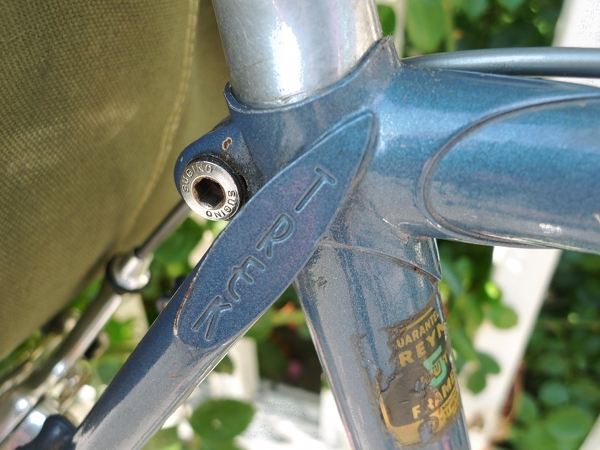
The stay caps also make for a good surface to embellish with an engraving of the manufacturer's name, like on this vintage Trek 610.


[image via Dancing Weapon]

Or with hand-painted flourishes, like on this Bob Jackson.


[image via Royal H.]

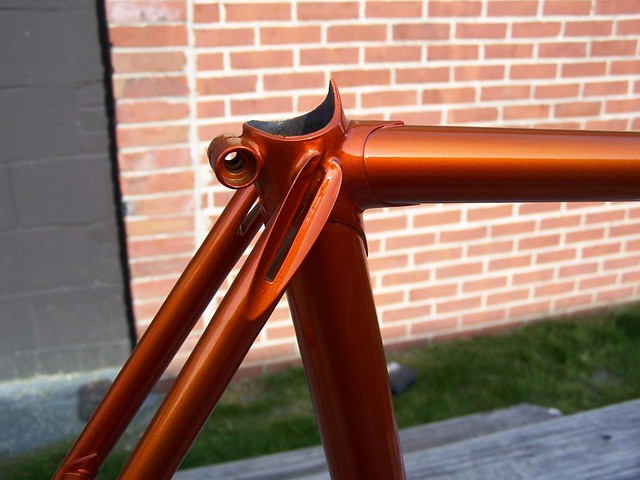
They can also be carved, if so desired, like on this early Royal H. frame.


[image via ribalrid]

While I prefer classic seat clusters, there are also many designs that deviate into all sorts of creative directions. On this Bates B.A.R. bicycle, the seat stay caps look like sharpened pencils and meet the main lug at the bottom.


[image via somervillain]

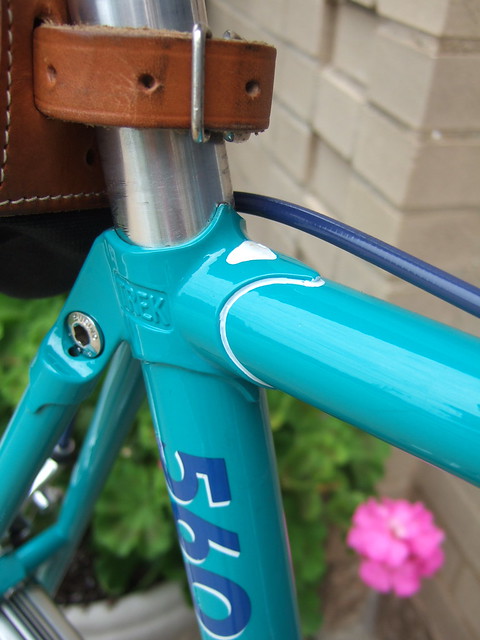
On this vintage Trek 560, the seat cluster is one big lug, and the seat stays are held by lugged sockets at the back.


[image via Kevin Saunders]

And then there are seat clusters where the stays connect to the tube directly, below the lug, like on this Formigli frame. (My understanding is that both this and the method used by Trek above is done to create tighter clearances?)


[image via Royal H.]

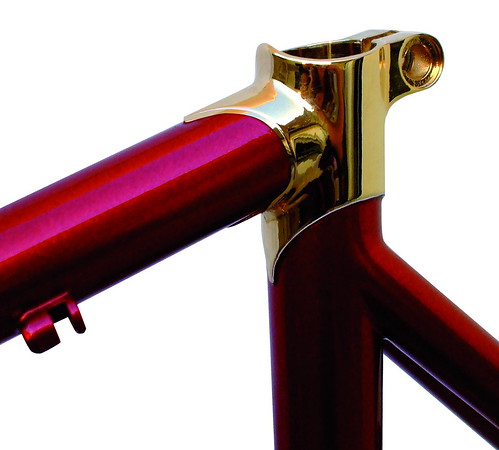
A similar approach to "fastback stays" by Royal H., with the seat stays attached at the rear.


When it comes to lugwork, there is no shortage of details to get obsessed about, and the topic can provide hours of impassioned discussion to those who feel strongly about one design over another. Crazy? Maybe so, but also beautiful... like the seat cluster on my Royal H. frame that will (hopefully very soon now) emerge as a fully built bicycle.